Canada responds to Trump's threats and reaffirms its commitment to the trade agreement

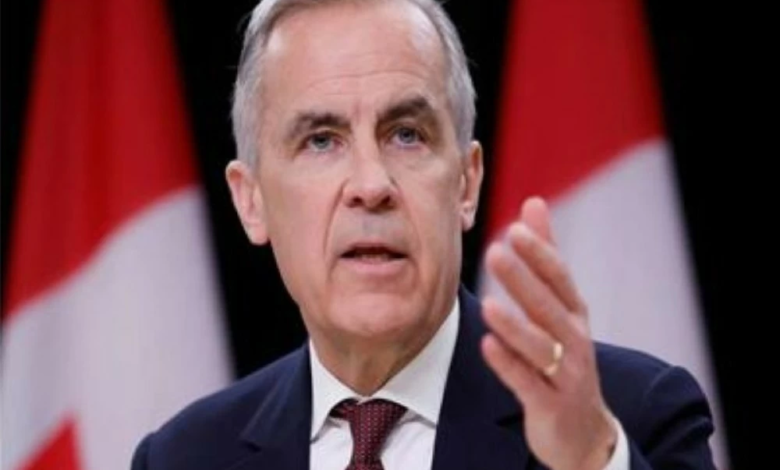
Canadian Prime Minister Mark Carney today reaffirmed his country's full and unwavering commitment to the terms of the USMCA free trade agreement with the United States, emphasizing that Ottawa respects all the commitments stipulated in this vital regional framework. These decisive statements come at a time of heightened anticipation and caution in North American trade relations.
A firm response to American threats
Carney's statement was a direct and official response to threats made by US President Donald Trump, who threatened to impose punitive tariffs of up to 100% on Canadian goods. Trump linked this threat to allegations that Canada was seeking a separate trade agreement with China, which Washington considered a violation of the spirit of economic cooperation on the continent and a threat to American industrial interests.
Background of the USMCA agreement and its strategic importance
To understand the depth of the current crisis, it is necessary to consider the historical context of the United States-Mexico-Canada Agreement (USMCA), which replaced NAFTA in 2020. This agreement is the backbone of the North American economy, regulating hundreds of billions of dollars in trade annually. It includes a controversial clause known as the "China Clause" (Article 32.10), which requires any member country to notify other member countries before entering into trade negotiations with a country with a "non-market economy." This clause was specifically designed to strengthen North America's economic front against China's expanding trade.
The controversy surrounding electric cars and cooperation with Beijing
The US president strongly criticized what he called Carney's "terrible mistake" of opening the door to broader economic cooperation with Beijing. American concerns center primarily on the electric vehicle sector, with Washington fearing that China could use Canada as a back door to flood the US market with cheap electric vehicles, threatening the American auto industry and related jobs. These concerns come at a time when the US is seeking to reduce its reliance on Chinese supply chains.
Clarification of the official Canadian position
For his part, the Canadian Minister of Trade with the United States categorically denied any intention on his country's part to conclude a comprehensive free trade agreement with China. The minister explained that recent moves were merely technical solutions to a number of outstanding issues related to tariffs and streamlining procedures, and did not amount to a strategic partnership that could threaten North America's economic security. He emphasized that Canada is well aware that its relationship with the United States is of paramount strategic and economic importance, and will not jeopardize it for the sake of an ill-considered rapprochement with Beijing.