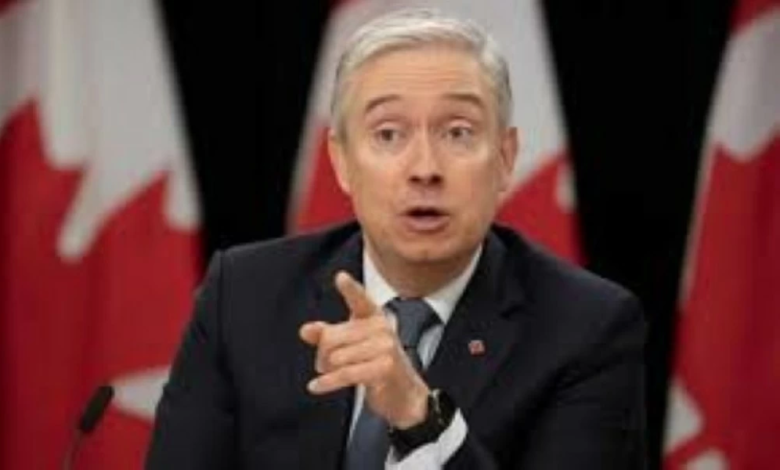

Canadian Minister François-Champagne, during his active participation in the World Economic Forum in Davos, affirmed that the international economic landscape is currently undergoing an unprecedented historical turning point, one whose complexities surpass those of traditional financial crises. He pointed out that the world now understands, more than ever before, the intrinsic and close interdependence of the triad of food security, energy security, and economic and national stability. He explained that these elements are no longer separate issues but rather interconnected pillars for any nation aspiring to preserve its sovereignty and the well-being of its people.
In his analysis of the new global reality, Champagne explained that over-reliance on external supply chains, particularly from unstable geopolitical sources, is no longer a viable option. This statement comes at a time when the world is witnessing a reshaping of economic alliances, driven by the repercussions of the COVID-19 pandemic and ongoing geopolitical tensions, prompting Western governments to adopt new strategies focused on "friendship" and optimizing production lines to ensure their continuity.
The minister stressed that nostalgia for old globalization models is not a successful strategy for the future, especially in light of the Fourth Industrial Revolution and the accelerating changes associated with advanced technology and artificial intelligence. He argued that these technologies are not merely tools for increasing productivity, but rather crucial factors in reshaping supply chains and making them smarter and more resilient to sudden shocks.
Canada as a strategic hub for future industries
Regarding Canada's position in this new world order, Champagne emphasized that his country represents a safe and attractive investment destination, benefiting from its political stability and abundant natural resources. He pointed to the ongoing efforts to strengthen Canada's industrial base, particularly in vital sectors such as electric vehicle manufacturing, aerospace, and the extraction and processing of rare and critical minerals. These minerals are considered the "oil of the 21st century" due to their crucial importance in technological industries and the transition to clean energy.
The minister concluded his remarks by sounding what he called a "wake-up call" to advanced economies, urging them to intensify cooperation among allies and democratic partners. He explained that strengthening economic resilience requires broad international coordination in the energy, industrial, and strategic resource sectors to build a global economic system capable of withstanding future challenges and ensuring that sovereign decisions are not held hostage to the pressures of external supply chains.