
Shock for football fans: Finalesma 2026 match cancelled
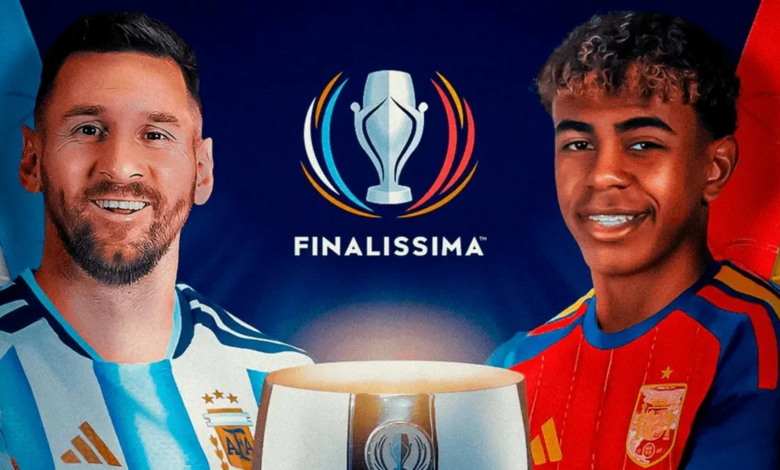
In news that came as a shock to football fans worldwide, efforts to organize the 2026 Finalesma match between Argentina and Spain have officially ended in cancellation. This disappointing decision came after negotiations between UEFA and the Argentine Football Association broke down, failing to reach a mutually agreeable solution regarding the venue and date of the highly anticipated match. This dashed fans' hopes of witnessing a footballing clash between the champions of Europe and South America.
Historical context and importance of the Final Essema tournament
The Finalisima (CONMEBOL-UEFA Champions Cup) is a revival of the historic Artemio Franchi Cup, which was held in 1985 and 1993. The tournament was recently revived as part of a strategic and historic partnership agreement between the European and South American football confederations (CONMEBOL). The last edition, held in 2022 at Wembley Stadium in London, saw Argentina crowned champions after a resounding 3-0 victory over Italy.
The great significance of the canceled 2026 edition lay in the fact that it would have pitted Spain, the reigning European champions (Euro 2024) after an exceptional performance, against Argentina, the 2024 Copa América champions and 2022 World Cup winners. Fans eagerly anticipated this match, which could have been Lionel Messi's final appearance against one of Europe's footballing giants, as well as a symbolic clash between Argentina's experienced generation and Spain's rapidly rising young generation. The cancellation of this event represents a significant loss, not only in terms of sporting potential but also in terms of the enormous economic and marketing revenue the match would have generated.
Reasons for the dispute: regional circumstances and stalled negotiations
According to official data, the match was initially scheduled to take place in Qatar on March 27, 2026. However, UEFA explained that "the current political situation in the region" prevented the event from being held there, despite extensive consultations with the Qatari organizers, who have repeatedly demonstrated their exceptional ability to host major international sporting events. UEFA described the cancellation as a "great disappointment.".
UEFA's narrative: Alternative proposals that never saw the light of day
The European Union attempted to salvage the situation by offering several alternative proposals, most notably holding the match at the Santiago Bernabéu Stadium, home of Real Madrid, with a guarantee of equal fan attendance for both teams. Other proposals included a home-and-away format (one match in Madrid and one in Buenos Aires) during an international break preceding Euro 2028 and the Copa América 2028. UEFA also suggested holding the match at a neutral venue within Europe, but all these options were rejected by the Argentinian side.
The Argentine narrative: Adherence to the principle of sporting justice
On the other hand, the Argentine Football Association fiercely defended its position, emphasizing its long-standing insistence on playing the match at a neutral venue to ensure sporting fairness. The Argentinians argued that playing in Madrid would give Spain an unfair advantage. The Argentine statement revealed that they had received a proposal on March 14th to hold the match in Italy, which they accepted, requesting a change of date to March 31st instead of March 27th. However, UEFA reversed its decision and informed them that the match could not be held on that date, despite the small difference.
Dead end and a sad ending
In a final attempt, the Argentinian side proposed postponing the match until after the 2026 World Cup, but this option clashed with the Spanish national team's congested schedule. Ultimately, negotiations reached an impasse, and the cancellation of the 2026 Faenalísima was officially announced. Both parties concluded their statements by exchanging expressions of regret and expressing their deep gratitude to the Qatari authorities for their prior readiness to host the tournament, and to Real Madrid and the Spanish Football Federation for their flexibility and cooperation throughout the arduous negotiations.