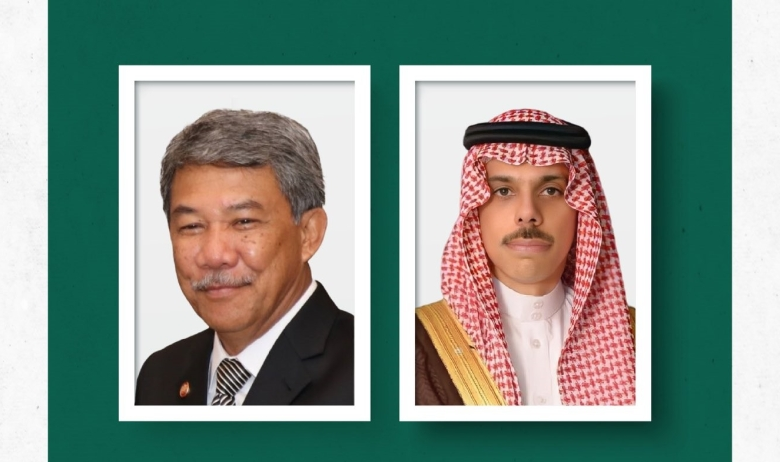
Faisal bin Farhan discusses relations and recent developments with the Malaysian Foreign Minister

His Highness Prince Faisal bin Farhan bin Abdullah, Minister of Foreign Affairs, made a telephone call today to the Malaysian Foreign Minister, Mr. Mohamed Hassan, as part of the ongoing communication and joint coordination between the Kingdom of Saudi Arabia and Malaysia.
During the call, the two sides reviewed the strong bilateral relations between their brotherly countries and discussed ways to enhance and develop them in various fields, in order to serve the common interests of their peoples and nations. They also discussed regional and international developments and the efforts being made regarding them, in addition to a number of other topics of mutual interest.
The depth of Saudi-Malaysian relations
These discussions reaffirm the deep-rooted and enduring historical ties between the Kingdom of Saudi Arabia and Malaysia, ties that have been strong for decades. These relations are based on robust religious and cultural bonds, and both countries are active and influential members of the Organization of Islamic Cooperation. The leadership in both countries is committed to ongoing political consultations to unify their visions and positions on issues facing the Muslim world and current global challenges.
Prospects for economic cooperation and shared visions
On the economic and development front, relations between Riyadh and Kuala Lumpur are witnessing remarkable progress, driven by the alignment of strategic visions embodied in the Kingdom's Vision 2030 and Malaysia's development policies. Both sides continuously strive to increase trade volumes and encourage mutual investments, particularly in the energy, technology, tourism, and logistics sectors, thereby enhancing opportunities for sustainable economic growth for both countries.
The importance of diplomatic coordination at the current stage
This contact is of particular importance given the delicate circumstances facing the region and the world, as Saudi-Malaysian coordination plays a pivotal role in strengthening international peace and security. The Kingdom and Malaysia are key pillars of stability in the Middle East and Southeast Asia, making continued dialogue between the two foreign ministers essential for addressing geopolitical challenges and coordinating positions in international forums to serve the causes of justice and peace.