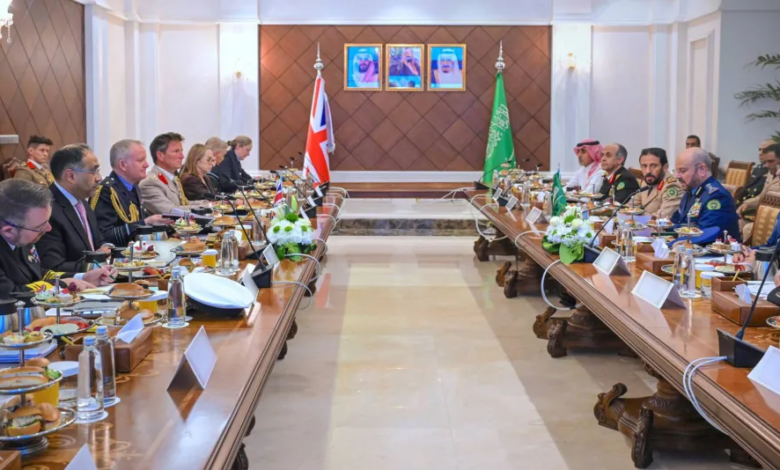

Saudi-British relations have reached a new milestone of fruitful cooperation, with a high-level meeting held between the two sides to discuss ways to enhance defense and military cooperation in a manner that serves the common interests of the two friendly nations. This meeting reflects the ongoing commitment of both countries' leadership to developing bilateral relations and propelling them towards broader horizons, particularly in vital and sensitive areas related to national security and regional stability.
Dimensions of the strategic partnership and the objectives of Vision 2030
This meeting is not merely a protocol event; it represents an integral part of the deep strategic partnership between the Kingdom of Saudi Arabia and the United Kingdom. These discussions are particularly significant given the Kingdom's relentless pursuit of the goals of "Saudi Vision 2030," specifically regarding the program to localize military industries. The Kingdom aims to localize more than 50% of its military spending by 2030, and Britain is considered a key partner in this endeavor, given its advanced technological and industrial expertise that can be transferred and localized to enhance the Kingdom's self-reliant defense capabilities.
A long history of military cooperation
Looking back at the historical context, defense relations between Riyadh and London span decades, characterized by strength and mutual trust. Britain has been, and remains, one of the Kingdom's most important suppliers of defense systems and military training. Areas of historical cooperation include fighter jet deals, joint military exercises between the two countries, and the exchange of intelligence and security expertise. This long-standing legacy provides a solid foundation for any new discussions aimed at modernizing defense systems and addressing contemporary security challenges.
The importance of coordination to confront regional and international challenges
At both the regional and international levels, Saudi-British coordination is of paramount importance given the tensions in the Middle East and the world. The two countries share a common vision regarding the necessity of combating terrorism, securing international waterways, and ensuring the stability of energy markets. Strengthening defense cooperation contributes to enhancing combat readiness and unifying military concepts, which positively impacts international peace and security. The continuation of these meetings underscores the commitment of both parties to working together as effective forces to guarantee stability in the region and to confront any threats that may affect the security of either country or its allies.
In conclusion, this meeting represents an additional building block in the edifice of strong relations between the Kingdom of Saudi Arabia and the United Kingdom, confirming that defense cooperation will remain a fundamental pillar in their extended strategic alliance, which is constantly evolving to keep pace with the requirements of the times and the challenges of the future.