The Shura Council calls on Tabuk University to undergo digital transformation and integrate with NEOM

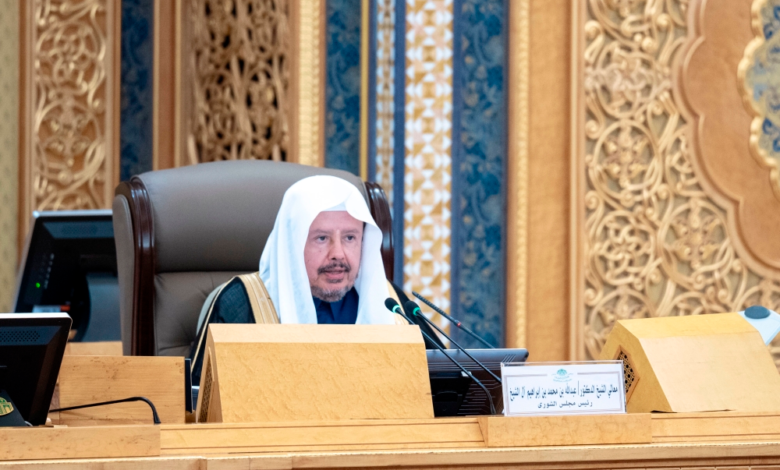
The Shura Council held its sixteenth regular session of the second year of its ninth term on Tuesday, chaired by His Excellency the Speaker of the Council, Sheikh Dr. Abdullah bin Mohammed bin Ibrahim Al Sheikh. The session addressed several vital issues concerning higher education in the Kingdom of Saudi Arabia, in addition to reviewing international agreements that enhance the Kingdom's regional and global standing.
Strategic decisions to develop the University of Tabuk
In a move aimed at keeping pace with rapid technological advancements, the Council issued a significant resolution requiring the University of Tabuk to enhance its digital transformation capabilities. This resolution aligns with the objectives of the Kingdom's Vision 2030, which prioritizes digitalization as a cornerstone for developing educational institutions. The Council also urged the university to develop and diversify its investments and endowments to ensure financial sustainability, enabling it to fulfill its academic mission.
In a related context concerning mega-projects, the council requested that the University of Tabuk study adopting an integrated working model with NEOM University . This directive holds significant strategic importance given the geographical location of the University of Tabuk and its proximity to the global NEOM project, which offers tremendous opportunities for the exchange of academic and research benefits and contributes to graduating qualified national talent that meets the needs of the labor market in this promising economic region.
Enhancing identity and sustainability at the Saudi Electronic University
The council discussed the Saudi Electronic University's annual report and urged the university to develop a clear institutional identity that strengthens its presence both locally and internationally. The council emphasized the importance of building an effective investment system to support the university's financial independence, as well as conducting in-depth studies to identify the reasons for some students' academic difficulties and develop appropriate solutions to retain them. This reflects the council's commitment to ensuring the quality of educational outcomes in modern teaching methods.
International expansion of the Islamic University
In an effort to bolster the Kingdom's soft power and disseminate its noble message, the Shura Council urged the Islamic University of Madinah to enhance its international presence by increasing its participation in global conferences and forums. The Council also called upon the university to explore the possibility of opening branches outside the Kingdom, in coordination with relevant authorities, reflecting the Kingdom's leading role in serving the Islamic world and promoting Islamic and Arabic education.
University governance in Bisha and Najran
The session also addressed the situations of Bisha and Najran Universities. The council urged Bisha University to strengthen its strategic management culture and restructure its health colleges. Regarding Najran University, the council called for a systematic study of its institutional challenges and for it to develop a new identity that reflects the comparative advantages of the Najran region, emphasizing the need to develop its digital transformation system.
International agreements to promote joint cooperation
The session was not limited to domestic affairs; the Council also approved several memoranda of understanding and international agreements, including tourism cooperation with Hungary, media cooperation with Kuwait, social services with Turkey, sustainable development with Bahrain, and a customs agreement with Nigeria. These approvals underscore the Kingdom's ongoing commitment to building bridges of international cooperation across various vital sectors.