Saudi Crown Prince receives message from Sultan of Oman: Significance of partnership

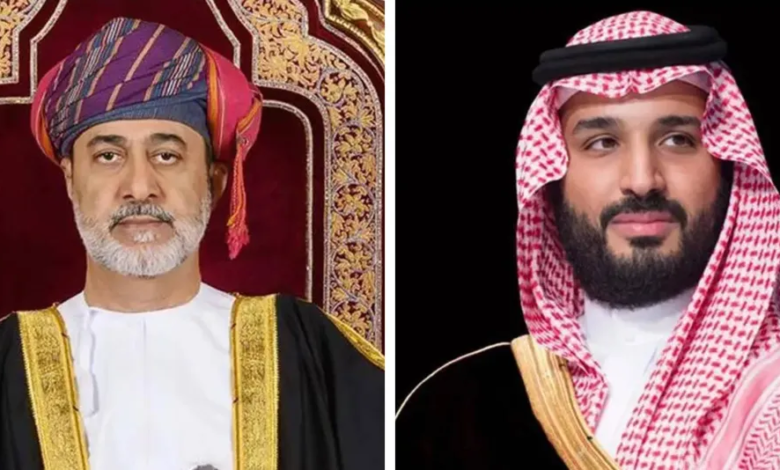
His Royal Highness Prince Mohammed bin Salman bin Abdulaziz Al Saud, Crown Prince and Prime Minister, received a written message from his brother, His Majesty Sultan Haitham bin Tariq, Sultan of Oman, relating to the strong and deep-rooted fraternal relations that bind the two brotherly countries, and ways to strengthen and develop them in various fields.
This message comes within the framework of ongoing communication and continuous coordination between the leaderships of the two countries, reflecting the depth of the historical, geographical, and social ties that bind the Kingdom of Saudi Arabia and the Sultanate of Oman. Saudi-Omani relations are characterized by a unique nature based on a shared cultural heritage and a common destiny, and have witnessed unprecedented qualitative leaps in recent years, culminating in the establishment of the Saudi-Omani Coordination Council, which aims to frame joint action and propel it towards broader horizons.
Dimensions of the strategic partnership and alignment of visions
This diplomatic engagement is particularly significant given the strong alignment between Saudi Arabia's Vision 2030 and Oman's Vision 2040, as both countries strive to diversify their economies, reduce dependence on oil, empower the private sector, and attract foreign investment. This convergence has resulted in the signing of numerous agreements and memoranda of understanding in vital sectors such as energy, transportation, logistics, tourism, and technology.
One of the most prominent examples of the development of these relations is the opening of the direct land route between the two countries through the Empty Quarter desert, which is a vital artery for enhancing trade and movement between the two peoples, which contributes to reducing transportation costs and opening new horizons for economic cooperation and the integration of supply chains in the region.
Political Coordination and Regional Security
On the political front, Riyadh and Muscat play a pivotal role in strengthening the Gulf Cooperation Council (GCC) and maintaining regional security and stability. The two countries' foreign policies are characterized by wisdom and balance, with a high level of coordination on regional and international issues of mutual concern, including efforts to achieve peace in Yemen and enhance maritime security in vital waterways.
The continued exchange of messages and visits between the leaderships of the two countries confirms the shared determination to move forward in strengthening this strategic partnership, not only for the benefit of the two brotherly peoples, but also because it represents a fundamental pillar for stability and prosperity in the Middle East region as a whole.