Disarming Hamas is hindering the Gaza agreement: An analysis of the reasons for the stalled negotiations

The ongoing negotiations for a ceasefire in the Gaza Strip are facing increasing complications, with the demand for the immediate disarmament of Hamas emerging as one of the most significant obstacles hindering efforts to finalize the Gaza agreement. Political and field analyses indicate that insisting on this condition as a top priority and a prerequisite for any political settlement or long-term truce could undermine the diplomatic efforts led by mediating parties, prolonging the conflict and exacerbating the humanitarian crisis.
The complexities of the negotiation landscape
This setback comes at a highly sensitive time, as international and regional parties, including the United States, Egypt, and Qatar, seek a compromise formula to ensure a cessation of hostilities and a prisoner exchange. However, observers consider raising the issue of disarmament at this early stage of the negotiations a premature move, skipping the natural steps of any settlement process in conflict zones. Final security arrangements are typically part of a comprehensive political solution, not a precondition for a ceasefire, especially given the Palestinian factions' insistence on retaining their weapons as their sole guarantee against ongoing military operations.
General context and historical background
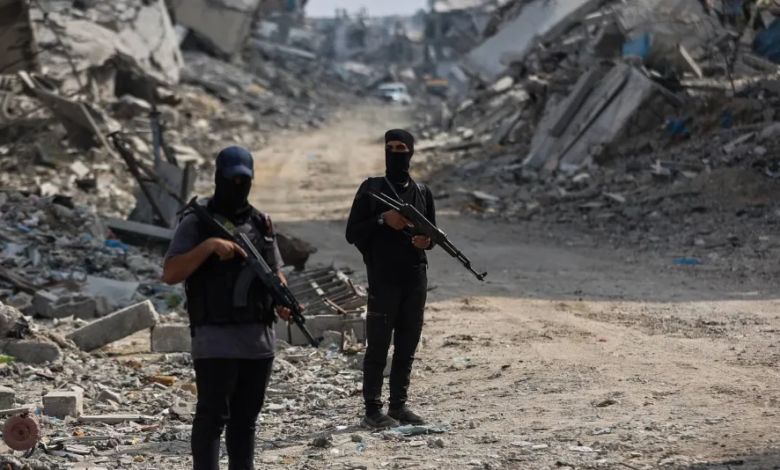
Historically, the issue of Palestinian factions' weapons in Gaza has been a fundamental point of contention in all previous rounds of conflict. Since Hamas took control of the Strip, Israel has placed the goal of "disarmament" at the forefront of its security priorities, while Hamas and other resistance factions consider weapons a strategic deterrent in the absence of a political horizon guaranteeing the establishment of an independent Palestinian state. Attempting to impose this condition by military force or hasty negotiation pressure brings to mind past unsuccessful experiences, where reality has proven that security solutions alone cannot resolve the root causes of the conflict without addressing the political, economic, and social factors of the blockade imposed on the Strip.
Regional and international importance and influence
The failure to reach an agreement due to the disarmament impasse has serious repercussions that extend far beyond Gaza. Regionally, the continuation of the war places immense pressure on neighboring countries, particularly Egypt and Jordan, and increases the risk of the conflict spreading to other fronts in the region—a scenario the international community is trying to avoid at all costs. Internationally, policymakers face increasing pressure from global public opinion due to the scale of the destruction and human losses, making a realistic agreement an urgent necessity.
In conclusion, experts believe that the solution lies in adopting a gradual approach, starting with a comprehensive ceasefire and relief for the population, and postponing thorny and complex issues such as final security arrangements and disarmament to later stages within a broader political framework, to ensure the success of the “Gaza Agreement” and to salvage what can be salvaged.