Saudi Education Indicators 2025: Student Discipline and Record Completion Rates

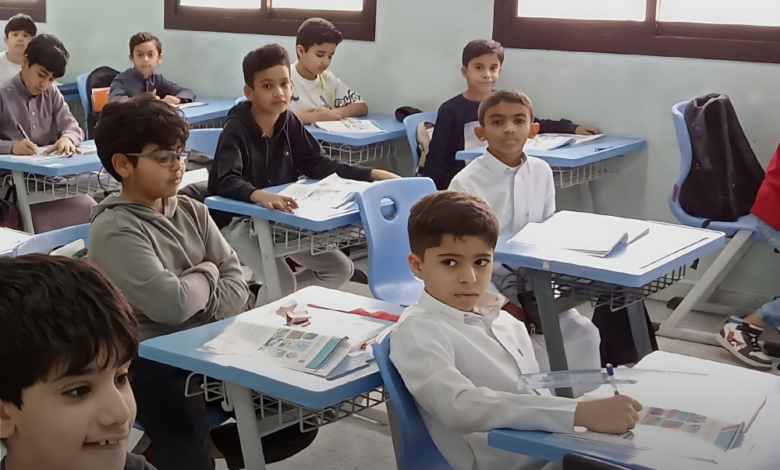
The General Authority for Statistics in Saudi Arabia revealed the results of the "General Education Survey 2025," which included promising numerical indicators reflecting the success of strategic plans aimed at developing the education system. These results are the culmination of diligent efforts exerted by the Ministry of Education and its partners to improve the quality of educational outcomes, in line with the objectives of the Kingdom's Vision 2030, specifically the Human Capability Development Program, which seeks to build a globally competitive citizenry.
The context of national transformation in education
These figures cannot be viewed in isolation from the historical context and the comprehensive development underway in the Kingdom's education sector. After years of focusing on quantitative expansion of schools and universities, the focus in recent years has shifted towards "improving the quality of education" and emphasizing learning outcomes. These statistics are tangible evidence that investment in the school environment and curriculum development is beginning to bear fruit, as schools have transformed into attractive and stimulating environments for creativity, rather than mere classrooms for receiving information.
Indicators of discipline and family partnership
Official data revealed remarkable student commitment, with school attendance reaching 92%, meaning that absenteeism dropped to only 8%. This rate reflects a growing awareness of the importance of time and academic achievement. In a clear indication of the improved psychological and educational climate, 97% of students expressed their enjoyment of the learning process. Simultaneously, the partnership between school and home was strengthened, with parental involvement in monitoring their children reaching 88.05%. This underscores the success of the Ministry's initiatives to bridge the gap between family and school, recognizing the family as the primary strategic partner in student success.
Academic excellence and school rankings
In terms of academic achievement, the Kingdom achieved record-breaking figures, with a 99.6% completion rate for both primary and intermediate levels. This is a strong indicator of the education system's effectiveness in reducing school dropout rates and ensuring students' continued enrollment. Furthermore, 2025 witnessed a significant leap forward in school evaluations by the Education and Training Evaluation Commission, with 760 schools being recognized for excellence.
In terms of technical performance, the results showed a tangible improvement in learning outcomes across 10,000 schools. Three out of every five schools succeeded in raising their students' performance in mathematics, and four out of every five in science—the two subjects that form the backbone of international competitiveness in standardized tests. Furthermore, the number of schools achieving excellence grew by 18%, and the number of schools classified at the "advanced" and "excellent" levels exceeded 13,000, representing 58% of all public schools.
The future impact of these indicators
These results hold profound implications for the future. The increased completion rates and improved performance in science subjects signify the emergence of a new generation of qualified national talent ready for the evolving job market. Furthermore, the reduction of schools in the "preparation" phase to just six reflects a firm commitment to quality standards and a zero-tolerance policy for poor performance. These indicators place the Kingdom on an upward trajectory in global competitiveness rankings and confirm that Saudi education is steadily progressing towards regional and international leadership.