Somali president's visit to a conflict zone with Somaliland: details and background

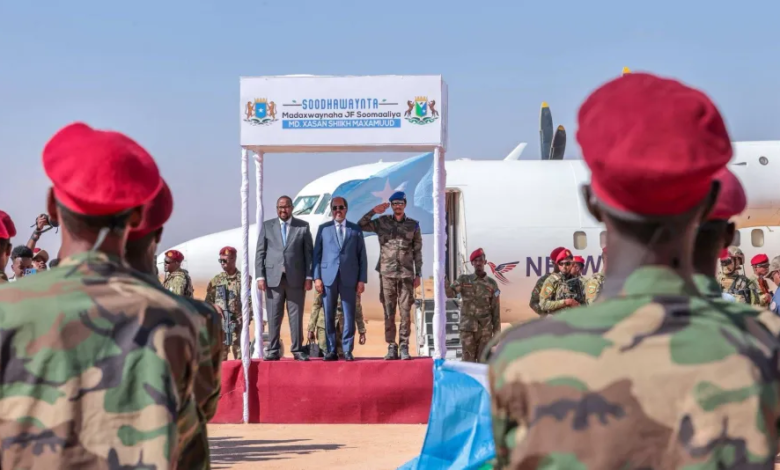
In a move with profound political and strategic implications, the Somali president visited a city located in the disputed territories with the breakaway region of Somaliland. This visit is not merely a protocolary gesture, but rather a strong message from the federal government in Mogadishu regarding its commitment to the territorial integrity of Somalia, and it comes at a time of significant geopolitical shifts in the Horn of Africa.
General context and historical background of the conflict
To understand the dimensions of this visit, one must return to the roots of the crisis, which dates back to 1991 when the region of Somaliland unilaterally declared its independence from the Republic of Somalia, restoring the borders of the former British protectorate. Despite enjoying relative stability and a democratic system compared to the south, the region has not received formal international recognition. The main flashpoint is in the Sool and Sanaag regions, home to clans historically and politically inclined towards unity with the Federal Republic of Somalia. This makes these areas a constant battleground for tensions and armed clashes between Somaliland forces and local militias loyal to Mogadishu.
The importance of the visit and the political messages
The Somali president's visit to this region is of paramount importance for several reasons. First, it is an attempt to bolster the legitimacy of the federal government in areas experiencing a security vacuum or sovereignty disputes. Second, the visit aims to reassure local residents who have suffered the ravages of repeated clashes, particularly in towns like Las Anod, which have witnessed recent violent tensions. The presence of the Somali political leadership in this geographical area sends a clear signal to Hargeisa (the capital of Somaliland) that the issue of borders and sovereignty remains open and non-negotiable from Mogadishu's perspective.
Expected impact: locally and regionally
Domestically, this visit could reshape clan alliances in the region. Those who support unity might see it as a significant morale boost, while the Somaliland authorities might view it as a provocation that threatens their internal stability and their efforts to gain international recognition. Regionally, Somalia's stability and territorial integrity are crucial to the security of the Horn of Africa. Neighboring countries, such as Ethiopia and Djibouti, are watching these developments closely, as any large-scale military escalation could trigger new waves of displacement and disrupt trade and security in strategic waterways. Consequently, the international community is viewing these developments with concern and anticipation, consistently calling for dialogue to prevent the region from descending into further conflict.