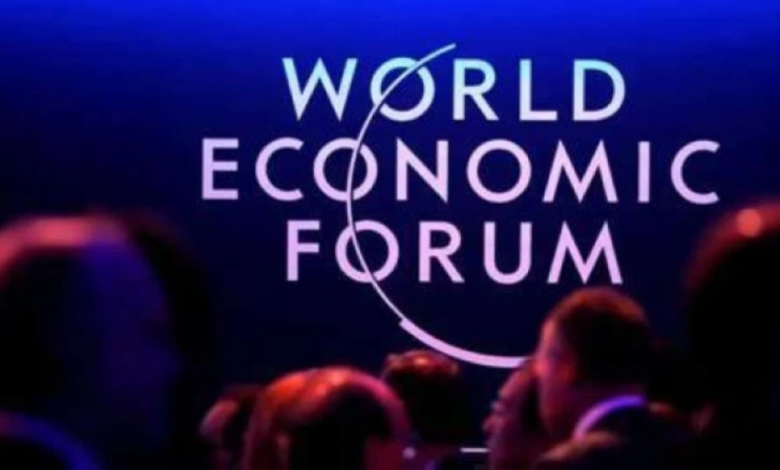
The World Economic Forum’s annual Global Risks Report reveals a radical shift in the landscape of threats facing the world, with the risk of a “geoeconomic confrontation” escalating to unprecedented levels. According to policymakers and experts, this type of conflict is now considered the most serious threat to global stability this year, surpassing many other traditional risks.
In a survey of more than 1,300 experts from around the world, representing the business, academic, governmental, international, and civil society sectors, 18% asserted that these politically charged economic confrontations are the most likely trigger for a major global crisis. These alarming findings come just days before the start of the World Economic Forum's annual meeting in Davos, scheduled for January 19-23, which is attracting significant attention due to the participation of high-profile figures, including US President Donald Trump.
The concept of modern economic warfare
Although the report maintained neutrality and did not name specific countries, the World Economic Forum's definition of geoeconomic confrontation reflects a tangible reality in current international relations. This concept encompasses the use of economic measures to achieve geopolitical objectives, such as restricting the movement of goods, knowledge, and services, or withholding vital technologies to build self-sufficiency and undermine competitors' capabilities, as well as seeking to consolidate spheres of influence and dominance.
The tools used in this “economic cold war” vary and include currency manipulation, imposing strict restrictions on foreign investment, applying packages of economic sanctions, in addition to providing government aid and direct support to local companies to undermine foreign competition, all the way to direct trade restrictions.
Other repercussions and risks
In a related context, the report did not overlook other risks; direct conflict between states ranked second among the potential causes of global crises, followed by phenomena resulting from volatile weather, based on surveys conducted last August and September. Experts indicate that the interplay between political and economic tensions creates a fertile ground for uncertainty, negatively impacting global growth rates.
Looking ahead to the next two years, any escalation in the geoeconomic confrontation is seen as having the highest probability of triggering a full-blown crisis, with this risk jumping from ninth place in previous surveys to first. Other economic risks, such as economic slowdown, high inflation, asset bubbles, and disruption to critical infrastructure, were also categorized as high risk.
In the long term, specifically over the next ten years, environmental concerns remain strongly present, as the report classified volatile weather and loss of biodiversity as the most severe and impactful risks to humanity, calling for international cooperation that may be hampered by current geo-economic conflicts.