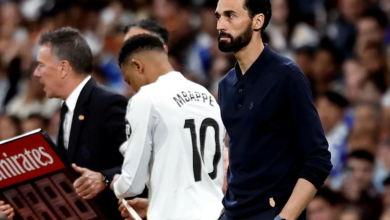

Spanish and international football fans are preparing to watch a high-stakes match, as Real Madrid plays its last game of 2025, when it hosts its stubborn opponent Sevilla, on Saturday evening, as part of the seventeenth round of the Spanish First Division League “La Liga”.
The opening whistle for this football summit is scheduled to blow at eleven o'clock in the evening, Mecca time, as the historic Santiago Bernabeu stadium in the capital, Madrid, will host this encounter, which carries with it many technical and psychological considerations for both sides before entering the winter break.
Real Madrid and their sights set on the top spot
Real Madrid, playing at home, enters the match with high ambitions and a burning desire to win and secure the three points. Los Blancos aim to end the calendar year on a high note by temporarily reducing the gap with their arch-rivals and league leaders, Barcelona, to just one point, thus intensifying the title race as the new year begins.
Real Madrid currently sit second in the La Liga standings with 39 points, four points behind Barcelona. The coaching staff and players are well aware that any slip-up this weekend could give their Catalan rivals a comfortable lead at the top of the table, and therefore, the motto "Victory is the only option" is the prevailing sentiment among the Bernabéu squad before their winter break, which will last until January 4th.
Sevilla and the attempt to salvage the season
On the other hand, Sevilla travels to the capital, Madrid, in a precarious position, desperately seeking to heal its wounds and appease its disgruntled fans. This match comes just days after the team's resounding defeat and early exit from the Copa del Rey Round of 32 at the hands of Alavés last Wednesday, a loss that has cast a shadow over the team's stability.
Sevilla has been struggling with inconsistent results this season, currently sitting ninth in the standings with 20 points. The Andalusian team's statistics reflect their struggles: they have accumulated their points from six wins and two draws, while suffering eight defeats. This makes today's match a golden opportunity – albeit a difficult one – to regain confidence against one of the world's strongest teams.
The importance of Spanish classics
Matches between Real Madrid and Sevilla always hold special significance in Spanish football, given the rich history shared by the two clubs and the intense rivalry that characterizes their encounters. This match represents a true test of Real Madrid's ability to maintain their upward trajectory in the league, while simultaneously presenting a significant challenge for Sevilla to prove their capacity to bounce back and compete for European qualification despite their recent setbacks.