
revealed The National Center for Meteorology, in its daily report, weather conditions for Wednesday across various regions of the Kingdom of Saudi Arabia, indicating the continuation of the unstable weather patterns characteristic of this period. The report explained that the chance of thunderstorms, ranging from moderate to heavy, remains, accompanied by hail and strong winds that will reduce horizontal visibility.
Areas of rainfall and fog formation
According to weather data, the rainy conditions are concentrated in parts of the Makkah, Al-Baha, Asir, and Jazan. The weather is not limited to rain; the center also indicated the possibility of dense fog during the night and early morning hours, which could affect traffic flow in parts of these regions, as well as in parts of northern Saudi Arabia.
Surface winds and dust
In a related context, other regions are experiencing surface winds that are stirring up dust and sand, leading to reduced horizontal visibility. This includes parts of the Northern Borders, Al-Jawf, Eastern Province, Riyadh, and Madinah, and extends to the southern parts of the Tabuk region. These weather phenomena are part of the Kingdom's geographical nature, which is affected by passing low-pressure systems.
State of the Red Sea and the Arabian Gulf
Regarding the maritime situation, the report provided the following details:
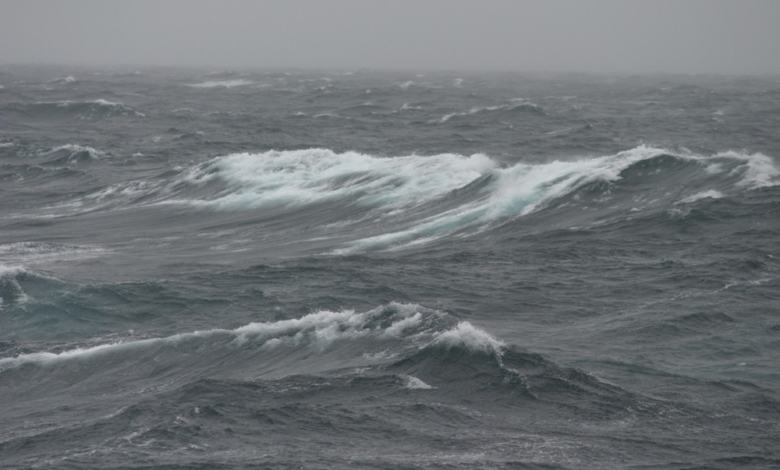
- Red Sea: Surface winds will be northwesterly to northerly in the northern and central parts, reaching speeds of up to 40 km/h, while in the southern part they will be southeasterly to southwesterly, reaching speeds of up to 50 km/h with the formation of thunderstorms. Wave heights will reach more than 2.5 meters in the southern part, making the sea state rough.
- Arabian Gulf: Winds will be southwesterly to northwesterly at speeds of up to 33 km/h, with wave heights ranging between half a meter and one and a half meters, and the sea state will be light to moderate.
Special alerts for the Riyadh region
The center issued a special alert for the Riyadh region regarding strong winds, blowing dust, and suspended particles. These conditions are expected to begin at 9:00 AM and continue until 6:00 PM. The areas affected by the strong winds and reduced visibility include Zulfi, Ghat, Majmaah, Shaqra, Thadiq, Huraymila, Rumah, Dhurma, Marat, Diriyah, and the capital, Riyadh, where wind speeds may reach 49 km/h.
The areas affected by the dust storm include (Al-Aflaj, As-Sulayyil, Wadi Ad-Dawasir, Ad-Dawadmi, Ar-Rayn, Al-Quway’iyah, Afif, Al-Hariq, Al-Kharj, Ad-Dilam, Al-Muzahmiyah, and Hawtat Bani Tamim), with a decrease in visibility of (3-5) kilometers.
The importance of following weather forecasts
These reports are of paramount importance to citizens and residents, as they help in planning daily commutes and avoiding roads that may experience flash floods or poor visibility. Authorities consistently urge caution while driving in such conditions and advise staying away from floodplains and valleys, especially in the southwestern regions that are experiencing heavy rainfall.