The General Authority for Roads: Coordinating camel crossings via 938 for road safety

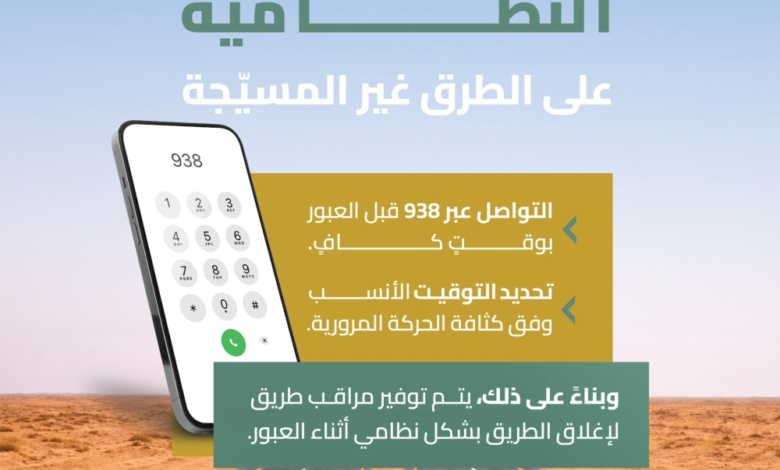
In a move aimed at enhancing safety levels on highways and main roads in the Kingdom of Saudi Arabia, the General Authority for Roads an urgent and important recommendation to all camel owners wishing to transport their livestock across road networks lacking protective barriers or designated camel crossings. The Authority urged owners to contact the unified call center (938) in advance to coordinate a safe and organized crossing.
Precautionary measures to ensure the safety of lives
The authority confirmed that it has put in place detailed precautionary plans to regulate camel crossings on single-lane or unfenced roads. The approved mechanism requires owners to coordinate with the call center to determine the appropriate time for crossing, stipulating that the crossing must take place only during daylight hours to ensure clear visibility, and that the camels must cross in one group, not separately. The authority also requires the presence of a designated road supervisor who is responsible for securing the crossing and placing the necessary warning cones to alert drivers well in advance of their arrival at the crossing area.
Historical background and geographical challenges
This step comes in response to the geographical challenges posed by the Kingdom's vast expanse, where the road network cuts through immense desert areas that serve as natural grazing lands for camels. Accidents involving stray camels, particularly at night, have long been a major security and social concern, prompting institutional action to regulate the relationship between high-speed traffic and traditional grazing practices, thus preserving cultural heritage and protecting lives simultaneously.
Infrastructure and legal responsibility
The authority noted in its statement the significant infrastructure efforts undertaken, highlighting that the Kingdom's road network now includes more than 50 designated camel crossings , in addition to the fencing of over 3,056 kilometers of roads. These measures aim to prevent animals from unexpectedly entering roadways. In this regard, the authority strongly warned against tampering with or cutting existing fencing, emphasizing that such actions will subject the perpetrator to strict legal penalties and fines, given the direct threat they pose to the safety of road users.
Expected impact and vision objectives
This proactive coordination is expected to significantly reduce serious accident rates and protect public and private property, including livestock. These efforts are part of the General Authority of Roads' strategy to achieve the objectives of the Roads Sector Strategy, stemming from the Kingdom's Vision 2030. This vision aims to position the Kingdom sixth globally in the Road Quality Index and reduce the accident fatality rate to less than 5 deaths per 100,000 people, while implementing the highest international safety standards (IRAP) across all road networks.