The Yemeni presidency appoints Al-Subaihi and Al-Khanbashi to fill leadership vacancies

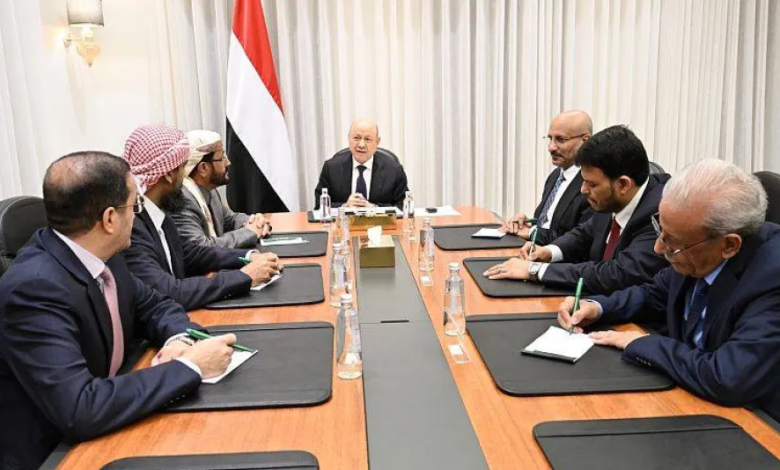
In a move aimed at strengthening internal cohesion and reorganizing the Yemeni political landscape, the Presidential Leadership Council issued new decrees filling vacancies within its structures, including the appointment of prominent figures such as al-Subaihi and al-Khanbashi. This step comes at a sensitive time in the Yemeni crisis, as the Council seeks to unify political and military efforts to confront current challenges.
Context of the formation of the Presidential Leadership Council
To understand the significance of these appointments, it is necessary to revisit the historical context of the formation of the Presidential Leadership Council. The Council was established on April 7, 2022, following the declaration of the transfer of power from former President Abd Rabbuh Mansur Hadi, at the conclusion of the Yemeni-Yemeni consultations sponsored by the Gulf Cooperation Council in Riyadh. The Council is headed by Dr. Rashad al-Alimi and includes seven deputies representing various active forces on the ground. The primary objective of establishing the Council was to end the fragmentation within the anti-Houthi camp and unify political, military, and security decision-making under a single umbrella.
Implications of the appointments: Regional and political balance
The names mentioned in the title, “Al-Subaihi” and “Al-Khanbashi”, carry extremely important political and geographical connotations in the Yemeni scene:
- Geographical and political dimension: Al-Khanbashi represents a political weight associated with Hadramawt Governorate, which is the economic lung of Yemen and the largest governorate in terms of area, reflecting the Presidential Council’s keenness to represent all regions and components in decision-making circles.
- Military and tribal dimension: The name Al-Subaihi is usually associated with tribal and military influence in the Lahj and southern regions, which are areas of strategic importance in the military equation against the Houthi group.
Filling the vacancies with these figures is not merely an administrative procedure, but a “political engineering” process aimed at ensuring fair and inclusive representation that enhances the legitimacy of the council and its ability to make crucial decisions.
Expected impact locally and regionally
Domestically, these steps are expected to help ease tensions among the various factions operating under the banner of legitimacy by integrating influential figures into key positions. They also send a message to the Yemeni public about the council's commitment to reactivating the paralyzed state institutions.
Regionally and internationally, the completion of the Presidential Council's organizational structures strengthens its position before the international community as a reliable partner capable of governing the country, whether in UN-led peace processes or in counterterrorism efforts and securing international waterways. These steps support the vision adopted by the Arab Coalition countries, led by Saudi Arabia and the United Arab Emirates, which aims to empower Yemeni state institutions to regain their role and effectiveness.
In conclusion, these appointments remain part of a long and arduous journey awaiting the Presidential Leadership Council, as the next phase requires greater unity to confront the economic challenges represented by the currency deterioration, and the ongoing military challenges in light of the Houthi militias’ intransigence and rejection of peace efforts.