China successfully concludes Taiwan military exercises: details and implications

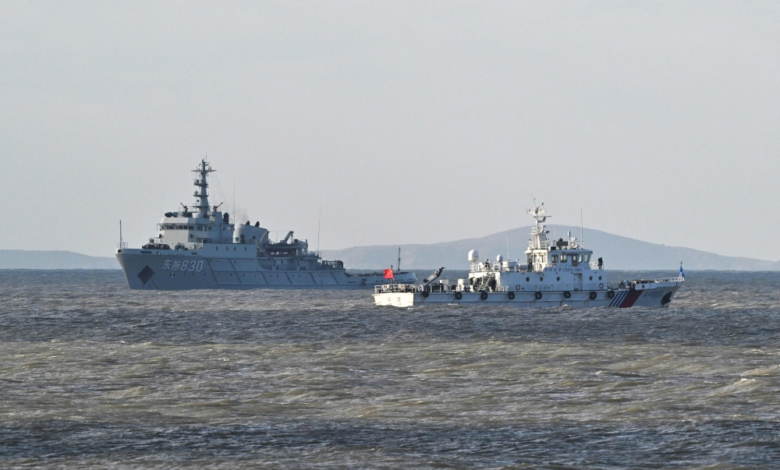
China announced on Wednesday the conclusion of its large-scale military exercises around Taiwan, asserting that participating forces had "successfully completed their mission." These intensive drills included live-fire exercises, simulated full-scale blockades of key ports, and precision strikes against maritime and land targets, reflecting a significant shift in Beijing's military strategy toward the island.
Details of the military operation
In an official statement, Captain Li Xi, spokesperson for the Eastern Theater Command of the People's Liberation Army (PLA), announced that the troops had successfully completed the "Justice Mission 2025" exercises. He explained that the operations focused on testing the combined combat capabilities of various branches of the armed forces, emphasizing that the army would continue its intensive training to enhance its combat readiness. Li Xi added that the primary objective was to "resolutely thwart the attempts of Taiwan separatists seeking independence and foreign interference," a clear reference to Western support for the island.
Historical context and escalating tension
These maneuvers come amid a long-standing historical tension dating back to 1949, when the Nationalist government fled to Taiwan after its defeat by the Communists in the Chinese Civil War. Since then, Beijing has considered Taiwan an integral part of its territory and vowed to annex it, by force if necessary. Tensions have escalated in recent years, particularly following high-level visits by US officials to Taipei and the rise of more independent Taiwanese leadership, prompting China to intensify its military pressure through so-called "gray zone tactics" and daily overflights.
Strategic importance and international implications
The significance of these maneuvers extends far beyond the military sphere, carrying profound geopolitical and economic dimensions. The Taiwan Strait is a vital waterway for global trade, through which a significant percentage of international shipping containers pass. Taiwan is also a global hub for the semiconductor and advanced chip industries. Consequently, any de facto blockade or armed conflict in this region could paralyze global supply chains and trigger a major economic crisis. The United States and its regional allies, such as Japan and the Philippines, are closely monitoring these developments, consistently urging restraint and the preservation of the status quo to ensure stability in the Indo-Pacific region.