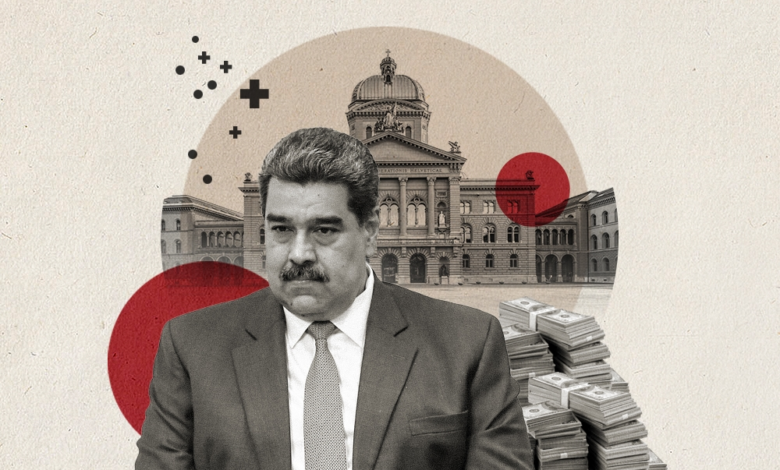

In an escalation reflecting an international commitment to combating illicit financial flows, Swiss authorities announced on Monday the freezing of substantial Venezuelan assets exceeding $880 million. This announcement marks the first official disclosure of precise figures regarding the amount of funds held in Swiss banks and linked to the political and economic crisis in Venezuela.
Details of the decision and asset freeze
The Swiss Federal Department of Foreign Affairs explained that this measure is part of the implementation of sanctions and preventive measures to curb capital flight. According to the data released, financial intermediaries and banks in Switzerland have reported freezing approximately 687 million Swiss francs (part of the total amount) under the recent decisions. The decision directly targets assets linked to Venezuelan President Nicolás Maduro, his wife Cilia Flores, and a small circle of officials and associates of the regime.
Historical context of Swiss sanctions
This decision was not spontaneous, but rather an extension of a policy initiated by Bern in 2018. That year, Switzerland decided to join the European Union's sanctions package against Venezuela in response to the deteriorating democratic situation and alleged human rights violations in the country. These sanctions included a ban on the supply of equipment that could be used for internal repression, as well as financial and travel restrictions on prominent figures in the Venezuelan government.
Switzerland, known as a global financial center, has been very keen in recent years to clean up the reputation of its banking sector and distance itself from being a haven for looted or illegal funds, especially those coming from countries suffering from political turmoil and suspicions of corruption.
Objectives of the procedures and their expected impact
The Swiss Foreign Ministry described the asset freeze as a "precautionary measure" primarily aimed at:
- Preventing any attempts to smuggle capital outside of legitimate channels.
- Paving the way for future mutual legal and judicial cooperation between Switzerland and Venezuela to recover funds if they are proven to be illegitimate.
- Exercising diplomatic and economic pressure in line with European and international trends.
It is worth noting that the latest decision, which came into effect on January 5, expanded the scope of targeting to include specific assets, with about two-thirds of the total assets (about $309 million) frozen based on the new regulations, while the rest of the funds were frozen under previous sanctions.
Exceptions and clarifications
Despite the severity of the decision, the Swiss authorities pointed out an important legal point, which is that this specific freeze does not randomly include all current members of the Venezuelan government, but focuses on a specific list of individuals and entities involved in financial suspicions or covered by international sanctions, reflecting the precision of the legal procedures followed in the Swiss banking system.