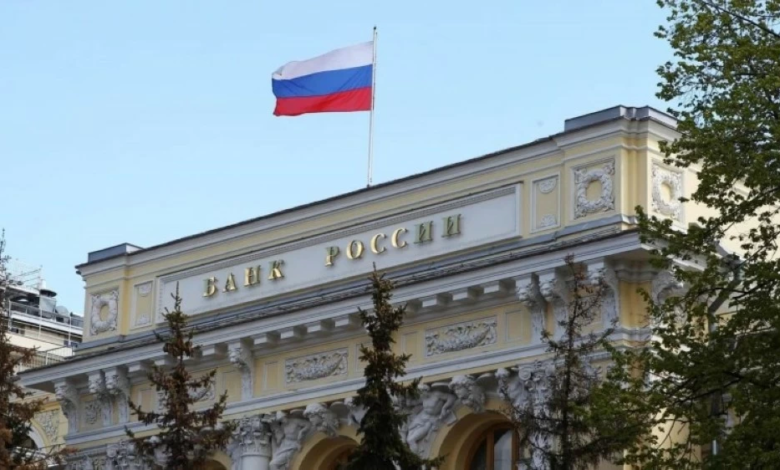
In an unprecedented escalation on the economic front, the European Union formally agreed to freeze the Russian central bank's assets deposited in Europe indefinitely, thus ending the era of short periodic reviews that had governed sanctions since the outbreak of the war.
The crucial step, approved by the bloc's member states, involves permanently freezing approximately €210 billion (around $246 billion) of Russian sovereign assets for as long as necessary, replacing the previous mechanism which required a unanimous vote every six months to extend the sanctions. This new strategy aims to provide long-term legal and financial cover for using the proceeds from these funds to support Ukraine.
Blocking the path to political blackmail
This decision carries internal political dimensions for the European Union, as it will deprive countries like Hungary and Slovakia, which maintain warmer relations with Moscow than other EU members, of their ability to use their veto power as a political pressure tactic every six months. Previously, the threat of not renewing sanctions put the EU at risk of having to return funds to Russia, a scenario that this legislative amendment has now addressed.
Context of the economic conflict and historical background
The roots of this crisis can be traced back to February 2022, following Russia's invasion of Ukraine. Western countries, led by the United States and the European Union, swiftly imposed unprecedented sanctions, most notably crippling the Russian central bank's access to its foreign reserves. The majority of these frozen assets are held by Euroclear, a Belgium-based financial institution, making the European Union the dominant player in the Russian asset equation.
International dimensions and their relationship to the G7
This European decision cannot be separated from broader international developments; it comes in response to demands from the United States and the G7. Washington stipulated guarantees that Russian assets would remain frozen for an extended period as a condition for participating in a massive $50 billion loan package for Kyiv, to be repaid from the profits and returns generated by those frozen assets. Without this indefinite freeze, there were concerns that lifting sanctions abruptly would leave Western countries to shoulder the burden of loan repayments instead of Russia.
Expected effects
This decision is expected to solidify Russia's isolation from the Western financial system for years, perhaps even decades, to come. It also sends a reassuring message to the Ukrainian government that the necessary financial flows for reconstruction and war effort will continue, regardless of political or electoral fluctuations within EU member states.