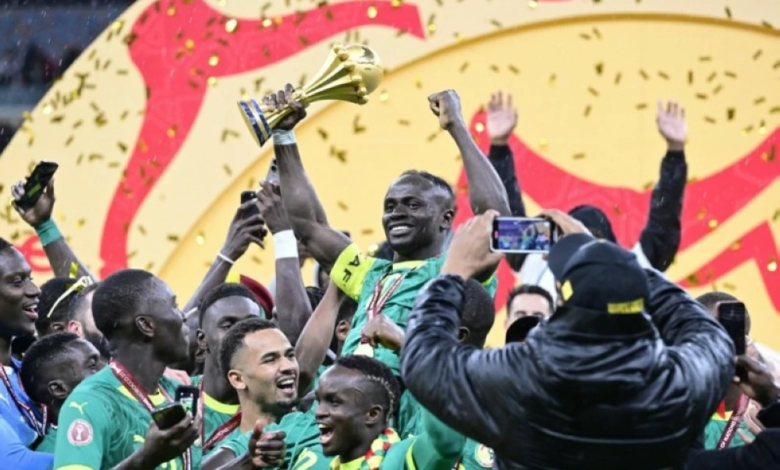
Senegal to be crowned African champions in 2025: Huge prize money and increased market value

The Senegalese national team cemented its dominance of African football by winning the 2025 Africa Cup of Nations title, following a dramatic and hard-fought 1-0 victory over the host nation, Morocco, in the final match held at the Moulay Abdellah Stadium in Rabat. This triumph not only secured the "Lions of Teranga" their second continental title, but also opened doors to unprecedented economic and marketing gains for both the players and the Senegalese Football Federation.
Details of the coronation night in Rabat
The final match was a high-level tactical and technical battle that lasted for over 90 minutes, ending in a goalless draw, amidst a massive crowd supporting the "Atlas Lions." However, the decisive moment came in the 94th minute of the first period of extra time, when Pape Gueye's powerful shot secured the coveted trophy for his country. Star player Sadio Mane was crowned the tournament's best player, in recognition of his pivotal leadership role in guiding his teammates to victory, cementing his status as one of the legends of African football.
Unprecedented financial prizes from CAF
The 2025 edition saw a significant increase in financial returns, reflecting the tournament's development and growing commercial value. The champion (Senegal) received a substantial prize of $10 million, a sum that will contribute significantly to the development of the country's sports infrastructure. The runner-up (Morocco) received $4 million, while Nigeria and Egypt each received $2.5 million after finishing third and fourth respectively, following Nigeria's victory over Egypt in the third-place match.
Increased market value and prospects for the 2026 World Cup
Beyond the immediate financial rewards, this title represents a tremendous economic boost for Senegalese players. It's well-known in the football world that continental triumphs instantly increase a player's market value in the global transfer market. Major European clubs are expected to flock to sign the young Senegalese talents who shone in the tournament, in addition to improving the contracts of current professional players.
This achievement also strengthens the Senegalese Football Federation's negotiating position in upcoming sponsorship contracts, especially with the approach of the 2026 World Cup. Senegal's entry into the World Cup as the African champion, alongside Morocco, puts it under the spotlight of global sponsors, which promises a golden era for Senegalese football, both technically and economically.