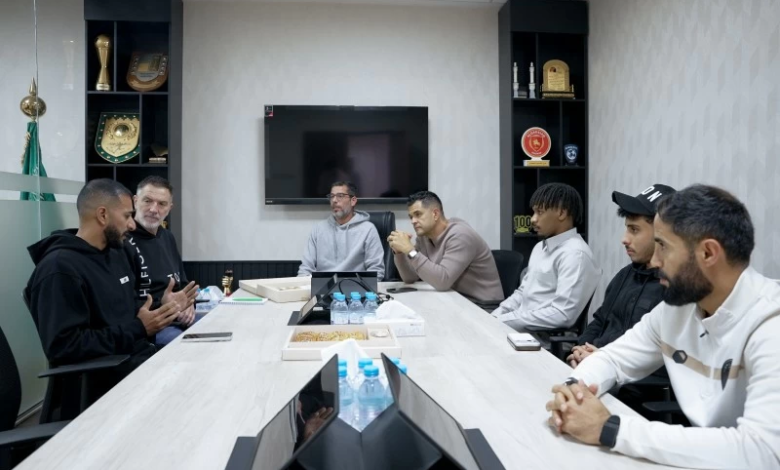
The Saudi national team is monitoring Dhari and Al-Khaibri in preparation for the 2026 World Cup

As part of ongoing efforts to strengthen the Saudi national team, the assistant coaching staff continues its intensive tour and field visit program to clubs, recently visiting Damac and Abha in the southern region. These steps are part of a comprehensive strategy for early and well-planned preparation for the anticipated participation in the 2026 FIFA World Cup, a tournament to which Saudi football is giving special attention to ensure a respectable showing befitting the Kingdom's footballing stature.
Close monitoring of Damac's stars
During their field visit to Damac FC, the coaching staff focused on assessing the players who are candidates to represent the national team in the upcoming period. The visit included direct and lengthy meetings with the outstanding duo, Dhari Al-Anzi and Abdulrahman Al-Khaibri. These meetings were not merely protocolary; they involved in-depth technical discussions during which the importance of the current phase, which demands the highest levels of discipline, was emphasized.
The coaching staff provided specific instructions to the players regarding technical and physical aspects, emphasizing the need for strict adherence to internationally approved health and nutrition programs for national team players. All vital signs and physical metrics for each player were also reviewed to enhance their readiness and ensure they are prepared for any future call-ups to the national team.
Joint technical coordination with Abha
On the other hand, the tour wasn't limited to observing players; it also included organizational and tactical aspects. The national team's coaching staff held an important meeting with their counterparts from Abha FC's first team. The meeting aimed to discuss technical and physical aspects and standardize work methodologies, thus strengthening integration between clubs and the national team and ensuring the continued development of players according to the same training regimen, whether they are with their clubs or in national team camps.
Dimensions of the visit and its impact on the Green Map
These visits are of paramount importance in the current context of Saudi football. Historically, the Saudi national team has relied primarily on players from the top four clubs, but with the development of the Saudi Professional League and increased competitiveness, the technical perspective has become more comprehensive, encompassing talents from various clubs. Expanding the selection pool to include players from clubs like Damac and Abha reflects a genuine desire to create a strong bench and diverse tactical options for the coach.
Domestically, these visits provide a tremendous morale boost to players across all clubs, motivating them to perform at their best, knowing that the national team is open to those who strive for excellence. Internationally, the early preparations for the 2026 World Cup reflect a high level of professionalism in planning, especially given the increased number of participating teams and Saudi Arabia's ambition to advance beyond the group stage and go far in the upcoming tournament, building on the successes achieved in the 2022 Qatar World Cup.