
A firm stance from the G7 regarding Iranian escalation
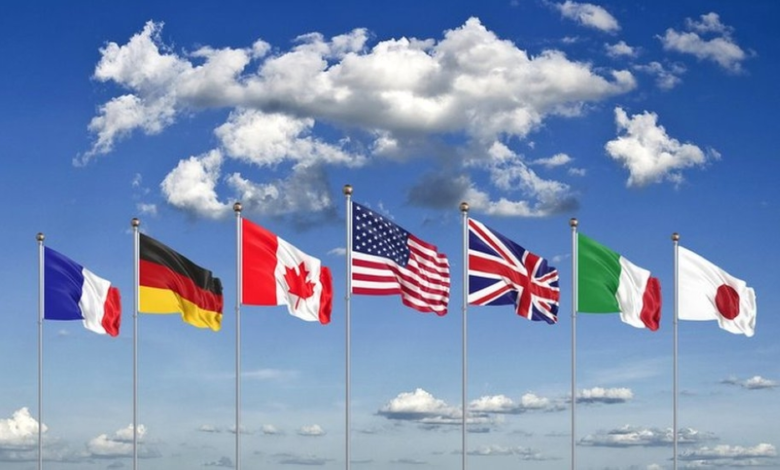
The foreign ministers of the G7 nations issued a strongly worded statement calling on Tehran to immediately and unconditionally cease its unjustified attacks on Middle Eastern countries. This unified international stance comes amid escalating regional tensions, particularly following recent tit-for-tat attacks in the region, including a direct Iranian response to attacks on its interests, raising serious concerns about a wider conflict.
Historical context and escalating tensions in the Middle East
To understand the implications of this statement, one must consider the immediate historical and political context. The Middle East is experiencing unprecedented turmoil, particularly with the continuation and expansion of conflicts to encompass multiple fronts. Iran's role has become increasingly prominent through its support for a network of allies and proxies in several Arab countries. The recent escalation, which included unprecedented direct attacks using drones and missiles, has set a dangerous precedent in the history of the region's covert conflicts, prompting major powers to intervene diplomatically to prevent the Middle East from sliding into a devastating, all-out regional war.
International support for the right to self-defense and the protection of sovereignty
The G7 alliance comprises the world's largest economies: the United States, the United Kingdom, France, Germany, Italy, Canada, and Japan, along with the High Representative of the European Union. In their joint statement, these allies reaffirmed their unwavering commitment to supporting their partners in the Middle East. The ministers emphasized the right of countries subjected to unjustified attacks by the Iranian regime or its proxies to defend their territory and protect their citizens, reiterating their full support for the sovereignty and territorial integrity of these countries against any external interference.
Expected impact: Maritime security and the Strait of Hormuz
International concern was not limited to military and political aspects, but extended to profound economic repercussions. The G7 devoted considerable time in its discussions to the importance of protecting maritime shipping lanes and ensuring freedom of navigation. The strategic role of the Strait of Hormuz is paramount, as it is one of the world's most vital waterways, through which approximately one-fifth of the world's daily oil consumption passes. Any threat to navigation in this strait or its associated waterways portends a global energy crisis and severe disruption to supply chains, negatively impacting the global economy.
Calls for calm and avoiding a slide towards all-out war
In conclusion, the G7 statement reflects an international consensus on the need to contain the current crisis. The continuation of the tit-for-tat attacks not only threatens the security and stability of Middle Eastern countries, but also extends its impact to global financial and economic stability as a whole. Intensive diplomatic efforts remain the international community's primary hope for compelling all parties to exercise restraint and avoid taking actions that could lead to unpredictable and catastrophic consequences.