
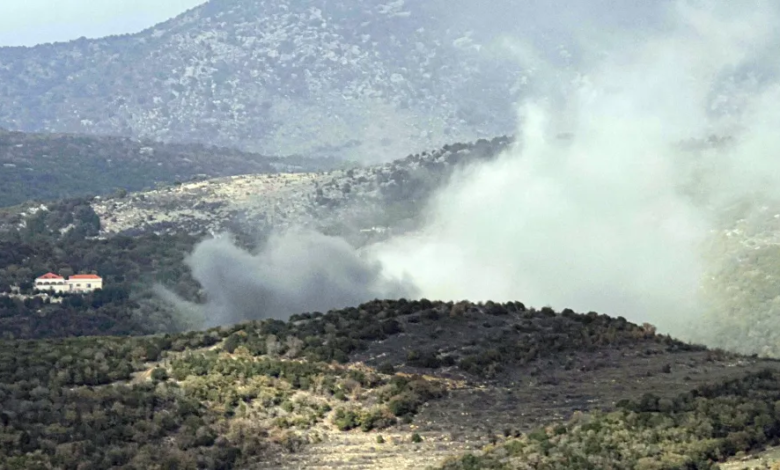
The Israeli army announced in an official statement that it had launched a series of airstrikes and artillery bombardments targeting Hezbollah positions and infrastructure in various parts of Lebanon. This announcement comes amid a significant military escalation on the northern front, with the army spokesperson confirming that the operations aim to cripple the group's military capabilities and prevent it from posing a direct threat to Israeli settlements and towns near the border.
Context of field escalation and changing rules of engagement
These strikes come as part of the ongoing confrontations that began with the outbreak of war in the Gaza Strip on October 7, when Hezbollah opened what it called a "support front" to relieve pressure on the Strip. Since then, the Lebanese-Israeli border has witnessed daily exchanges of fire, but the pace and intensity of the shelling have increased significantly recently. Military operations have sometimes extended beyond the traditional geographical scope of border skirmishes, reaching deep into southern Lebanon and the Bekaa Valley, indicating a gradual shift in the unwritten "rules of engagement" that have governed the conflict for years.
Historical background and Resolution 1701
This escalation brings to mind the July 2006 war, which ended with UN Security Council Resolution 1701. That resolution called for a cessation of hostilities and the establishment of a buffer zone, free of armed groups, between the Blue Line (the demarcation line) and the Litani River. However, current developments are putting this international resolution to the test, amid mutual accusations of violations. Israel demands the withdrawal of Hezbollah forces beyond the Litani to ensure the return of northern residents to their homes, while Hezbollah links a halt to its operations to an end to the Israeli war on Gaza.
Regional repercussions and international concerns
The impact of this shelling extends far beyond the military sphere, encompassing wide-ranging humanitarian and political repercussions. The exchange of fire has displaced tens of thousands of civilians on both sides of the border and caused extensive damage to infrastructure and agricultural land in southern Lebanese villages. Internationally, there are growing fears that the situation could escalate into a full-blown war, drawing in other regional actors and threatening the stability of the entire Middle East. International powers, particularly the United States and France, are intensifying their diplomatic efforts to contain the situation and prevent it from spiraling out of control, warning that any miscalculation could lead to a regional catastrophe.