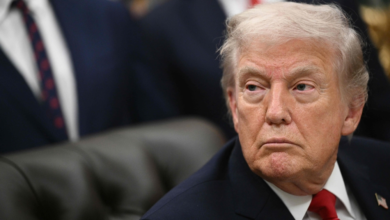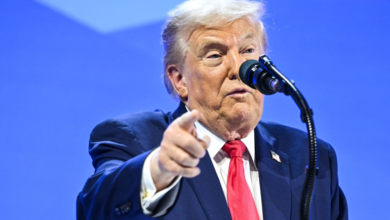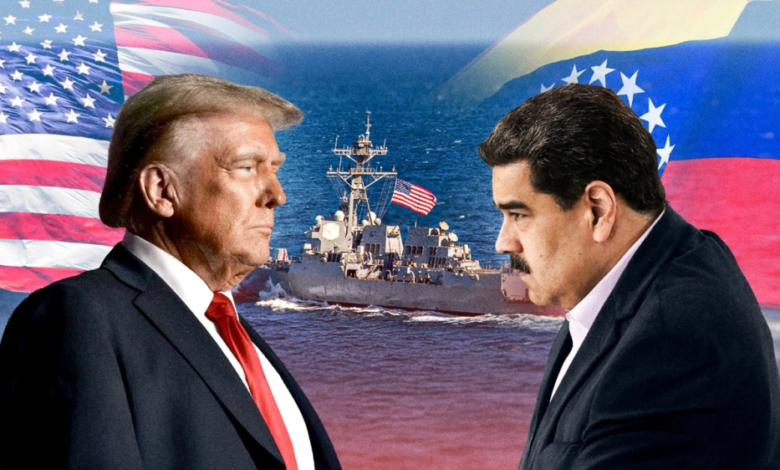
In a dramatic development marking a historic turning point in the Latin American political landscape, the United States has officially announced serious criminal charges against Venezuelan President Nicolás Maduro . This announcement follows a large-scale security operation, details of which were revealed by US President Donald Trump, who confirmed the successful capture and extradition of Maduro and his wife from Venezuela.
Details of the operation and the charges brought
President Trump explained that the operation was carried out with meticulous and high-level coordination with U.S. law enforcement agencies, describing the strike as "successful and wide-ranging." According to reports, including those from Reuters, Maduro and his wife, Cilia Flores, were airlifted out of Venezuela to face trial. The U.S. charges center on the Venezuelan regime's alleged role in turning the country into a safe haven for drug traffickers and armed groups, and using the proceeds of smuggling to finance activities that destabilize the region.
Background to the conflict: Years of tension and sanctions
This US move is not a spur-of-the-moment decision, but rather the culmination of years of escalating tensions between Washington and Caracas. In March 2020, the US Department of Justice had already indicted Maduro and several of his top aides for "horrific narco-terrorism," accusing them of conspiring with Colombian FARC rebels to flood the United States with cocaine. Washington then offered a $15 million reward for information leading to his arrest, thus providing a lengthy legal framework for the current arrest operation.
Geopolitical dimensions and impact of the event
The arrest of a sitting head of state carries profound geopolitical implications and far-reaching consequences:
- On the domestic front: This event puts Venezuela at a dangerous crossroads, as the country is expected to experience a power vacuum that could either lead to internal conflict between the regime's factions and the military, or open the door for the opposition to restore democracy after years of totalitarian rule and crushing economic crises.
- On a regional level: This move sends a strong warning message to anti-American regimes in Latin America, and may change the balance of power on the continent, especially with regard to leftist alliances.
- On the international level: This move is likely to provoke mixed reactions, particularly from Maduro's traditional allies such as Russia, China and Cuba, who have long viewed US actions as interference in the internal affairs of sovereign states.
Venezuela has been experiencing an unprecedented economic and humanitarian crisis for years, resulting in hyperinflation and severe shortages of food and medicine, which has driven millions of Venezuelans to emigrate. Observers believe that the end of the Maduro era could mark the beginning of a long and arduous reconstruction process for a country that possesses the world's largest oil reserves but is suffering from a complete economic collapse.