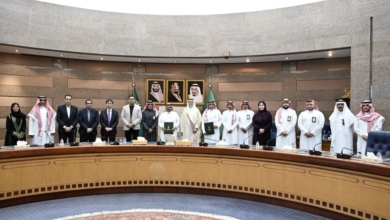
In a move reflecting the Kingdom of Saudi Arabia’s commitment to developing human capital in the health sector, King Saud Medical City the graduation of a new batch of (335) male and female trainees, under the patronage and in the presence of the CEO of the First Riyadh Health Cluster, Dr. Saleh bin Abdullah Al-Tamimi, and with the participation of a number of executive and academic leaders.
Enhancing national competencies in the health sector
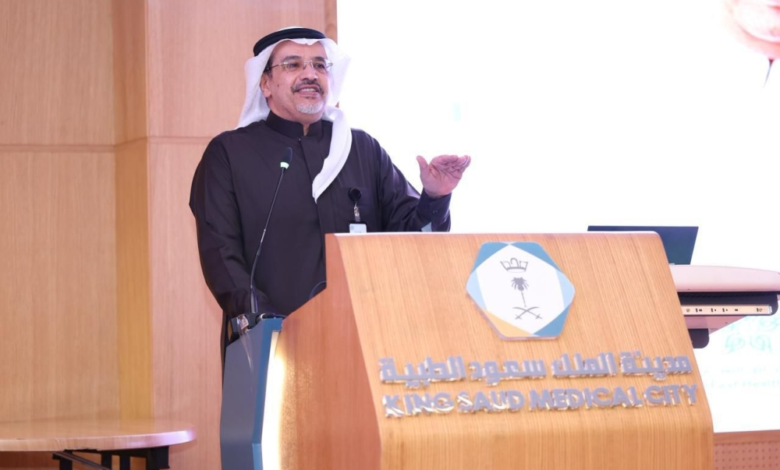
During the ceremony, Dr. Saleh Al-Tamimi emphasized that this occasion truly embodies the fruits of investing in human capital, noting the unwavering support provided by the wise leadership to the health education and training system. He explained that the graduates form a fundamental pillar in supporting the healthcare system, expressing his hope that these young talents will contribute to raising the quality of services provided to beneficiaries and enhancing the efficiency of medical and administrative performance in accordance with the highest international standards.
King Saud Medical City: A History of Giving and Training
King Saud Medical City (historically known as Al-Shumaisi Hospital) is one of the oldest and most prestigious medical institutions in the Kingdom and the region. Since its establishment, it has played a pivotal role not only in providing treatment services but also as a leading training and educational center. The graduation of this class is a continuation of this rich legacy, as the city serves as an incubator for medical talent, providing an advanced educational environment that contributes to meeting the growing needs of the healthcare sector and developing specialized medical professions.
Keeping pace with the goals of the Kingdom's Vision 2030
This achievement aligns with the objectives of the Health Sector Transformation Program , one of the programs under the Kingdom's Vision 2030, which aims to restructure the health sector into a comprehensive, efficient, and integrated healthcare system. Developing national talent through scholarships, fellowships, and in-house training programs is a cornerstone of ensuring the sustainability of healthcare services and guaranteeing a national workforce capable of addressing future health challenges and utilizing modern medical technologies.
Remarkable training figures and achievements
For his part, Dr. Mohammed Al-Maliki, Executive Director of the Riyadh Health District and Executive Director General of the City, explained that training programs receive significant attention to qualify personnel and build a sustainable system. In a related context, Dr. Dhafer Al-Ahmadi, Executive Director of Academic Affairs, revealed statistics reflecting the scale of the diligent work, noting that the number of training programs accredited by the Saudi Commission for Health Specialties in the city has reached 91, including 14 programs that were recently accredited in 2025.
Al-Ahmadi pointed out that the total number of trainees reached (1181) male and female trainees, achieving a distinguished success rate of (98%) for the year 2024. The city also continues to invest in its staff by sending (154) male and female employees to the finest local and international universities and centers, which confirms the city’s strategy in the continuous development of the workforce.