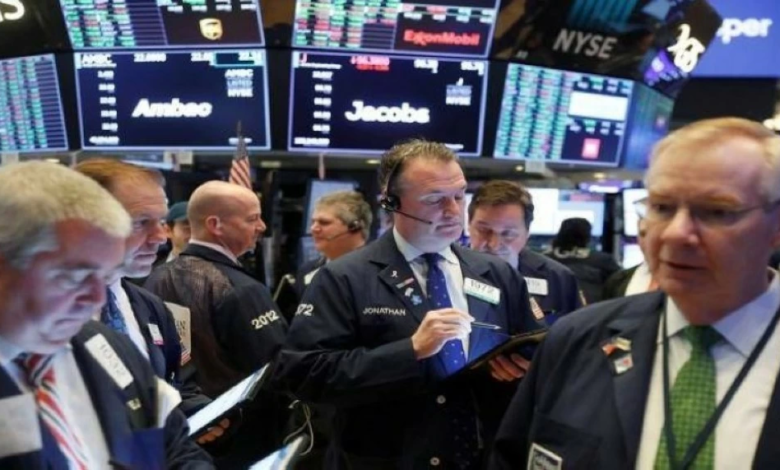

Global stock markets surged on Tuesday, demonstrating resilience in the face of escalating geopolitical tensions. Investors shrugged off concerns about political instability, focusing instead on economic data and corporate earnings, propelling several major indices to new record highs.
Record performance in Asian markets
Leading this rally, Asian markets performed exceptionally well, with Japan's Nikkei 225 index 1.3% to close at 52,518.08 points, surpassing its previous record high set in late October. This surge reflects investor confidence in the Japanese economy and the ability of major companies to achieve growth despite global challenges.
Japan wasn't alone in this positive trend. South Korea's Kospi index rose 1.5% to 4,525.98 points, primarily driven by strong gains in the automotive and electronics sectors, two key pillars of the Korean economy. China also saw a notable rebound, with Hong Kong's Hang Seng index jumping 1.4% to 26,710.45 points and the Shanghai Composite index climbing 1.5% to 4,083.67 points, its highest level in four years, indicating a recovery in risk appetite in the world's second-largest economy.
Differences in European and American markets
Moving to Europe, early trading saw a slight mixed performance with a slight upward bias. Germany's DAX index rose 0.1% to 24,890.59 points, and the UK's FTSE 100 index climbed 0.5% to 10,056.36 points, while France's CAC 40 index slipped slightly by 0.3%.
In the United States, Wall Street continued its upward trend, with the Dow Jones Industrial Average a new record high, rising 1.2% to 48,977.18 points. The energy and banking sectors contributed significantly to this rise, along with support from industrial companies and retailers. Despite a slight pullback in futures contracts, spot indices showed clear buying strength, with the Nasdaq Composite rising 0.7% and the S&P 500 nearing its record highs with gains of 0.6%.
Signs of growth amid crises
This collective rise in stock market indices carries significant economic implications; it suggests that financial markets have already priced in current geopolitical risks, or that they perceive fundamental economic indicators as sufficiently strong to offset the negative effects of these tensions. Historically, capital has often flowed into high-yield assets like stocks when the economic outlook for companies is positive, even amidst political turmoil.
It is worth noting that the rise in precious metals in conjunction with the rise in stocks indicates a hedging strategy followed by investors, where liquidity is distributed between risky assets (stocks) and safe havens (gold and silver) to ensure the balance of investment portfolios in light of global uncertainty.