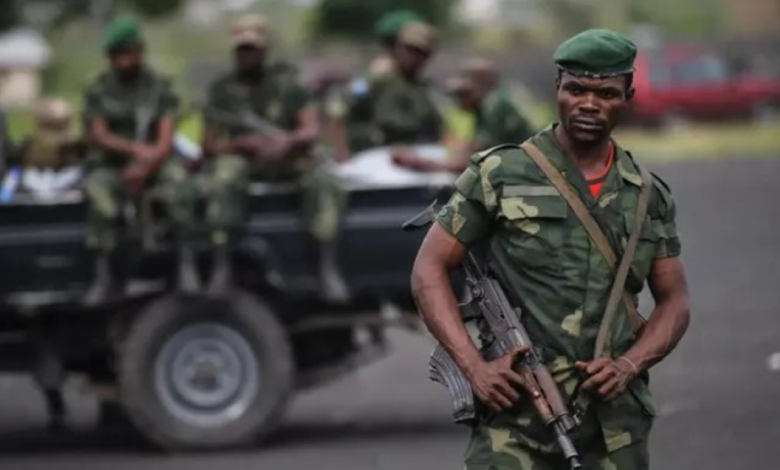
The clashes in Ovira, Congo: The truth about the M23 withdrawal and the situation on the ground

On Monday, fierce clashes erupted on the outskirts of the strategic city of Uvira in eastern Democratic Republic of Congo between M23 rebels and the local Wazalindo militia, loyal to the Kinshasa government. This dangerous escalation comes just days after the Rwandan-backed rebel movement announced it was beginning to withdraw its forces from the area in response to international pressure, a move that has raised widespread doubts about its sincerity.
Details of the field confrontations
Local sources and eyewitnesses told AFP that the sounds of gunfire and shelling were clearly audible in various parts of Uvira. Mafikiri Mashimango, head of one of the city's leading civil society organizations, stated that the exchange of fire was concentrated between M23 elements and the Wazalindo groups, the name given to local militias fighting alongside the Congolese army to defend their territory.
Residents confirmed that the clashes are concentrated mainly in the hills and neighborhoods south and southwest of the region, extending to the outskirts of the vital port of Kalondo and the shores of Lake Tanganyika. This deteriorating security situation has brought public life to a standstill, with commercial activity ceasing and residents remaining indoors for fear of indiscriminate shelling. "A bomb landed on a nearby plot of land, and we can hear gunfire over our houses," said one resident of the Mulongwe area, amidst accusations traded between the warring parties regarding responsibility for the shelling.
General context and strategic importance
The city of Uvira holds significant strategic importance due to its location on the shores of Lake Tanganyika and near the border with Burundi, making it a vital trade hub in eastern Congo. The M23 offensive towards South Kivu province follows a series of military operations that enabled them to seize key cities such as Goma and Bukavu earlier, reflecting the movement's ambition to expand its territorial control.
Despite the movement's announcement last Wednesday that it had begun withdrawing its forces at Washington's request and as part of a US-brokered peace agreement, field reports indicate a different reality. Security and local sources confirmed that members of the movement remain in the area, some having resorted to wearing civilian clothing as a disguise, further complicating the situation and increasing distrust.
Background of the conflict and its effects
This escalation is part of a long-running conflict that has plagued eastern Democratic Republic of Congo for decades, where dozens of armed groups vie for control of the region's territory and rich natural resources. Kinshasa and the United Nations accuse Rwanda of supporting the M23 movement, an accusation Kigali consistently denies, further fueling regional tensions.
The continued fighting is exacerbating the catastrophic humanitarian crisis in the region, with thousands forced to flee the violence, amid fears of outbreaks of epidemics such as cholera and deteriorating food security, calling for urgent international intervention to stabilize the truce and protect civilians.