Chile declares state of emergency: 16 dead and thousands evacuated due to forest fires

Chilean President Gabriel Burrich today officially declared a state of emergency in the southern regions of Noble and Biobío, in response to the worsening wildfires that have gone out of control in several areas, leaving behind significant human and material losses.
Details of the disaster and human losses
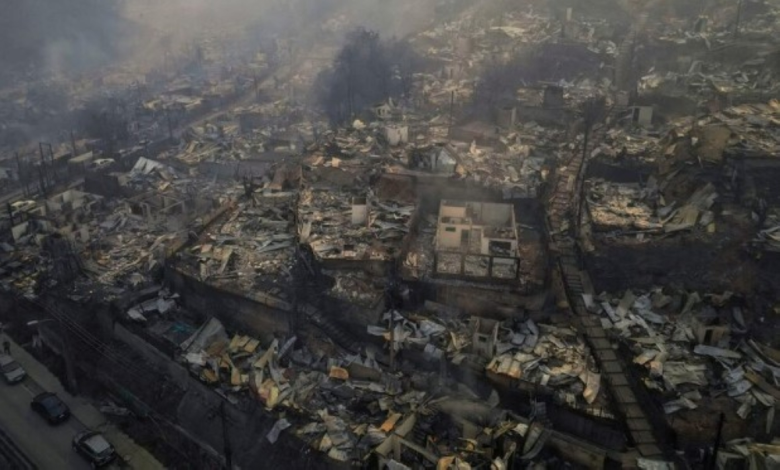
This presidential announcement came in the wake of the rapid spread of the fires, which consumed vast areas, resulting, according to initial reports, in the deaths of at least 16 people. Authorities were forced to carry out large-scale evacuations, with approximately 20,000 people fleeing their homes to escape the flames and thick smoke that blanketed the region. Rescue and ambulance teams are working around the clock to provide assistance to those affected and to secure temporary shelters for displaced families.
Control efforts and the field situation
Chile's National Forestry Agency reported that firefighters, supported by emergency services and the military, are continuing their desperate fight to control nearly 24 active fires across the country. Field reports indicate that the largest and most intense fires are concentrated in the Noble and Biobío regions, located approximately 500 kilometers south of the capital, Santiago. As of this report, the fires have consumed nearly 8,500 hectares of forest and farmland, posing a direct threat to numerous communities and rural villages, prompting authorities to issue immediate and strict evacuation orders to protect lives.
The climatic and geographical context of the crisis
These fires come at a time when Chile, and other countries in the Southern Hemisphere, are experiencing the peak of summer, a season typically characterized by high temperatures and low humidity. Central and southern Chile are particularly prone to wildfires at this time of year due to dense forests and strong winds that contribute to the rapid spread of flames. Climate experts link the increasing frequency and intensity of these disasters to global climate change, which has led to prolonged droughts in the region, making vegetation highly flammable.
Expected economic and environmental repercussions
These fires are expected to have significant short- and medium-term economic and environmental repercussions. The regions of Noble and Biobío are important centers of agricultural activity and forestry in Chile. The destruction of thousands of hectares not only means the loss of vegetation and biodiversity, but also damage to crops and rural infrastructure, placing additional pressure on the local economy and necessitating urgent government plans for reconstruction and compensation for those affected once the disaster is under control.