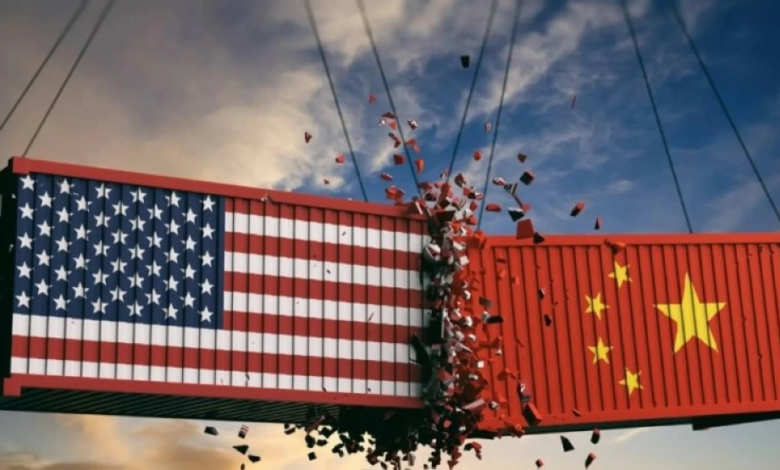
China accuses America of disrupting global trade and predicts a record surplus in 2025

In a striking development reflecting the deep economic divide between the superpowers, China has directly blamed the United States for exacerbating the global trade imbalance. This comes as the world's second-largest economy projects a record trade surplus of $1.2 trillion for 2025 , despite tariffs and the fierce trade war revived by President Donald Trump.
Record numbers amid geopolitical tensions
Official data from China's customs administration revealed that the country's goods exports grew by 6.6% in dollar terms in December compared to the previous year, more than double the average forecast of 3.1% indicated by a Bloomberg survey. This strong performance builds on the 5.9% growth recorded in November, pushing the annual trade surplus above the trillion-dollar mark for the first time in history, surpassing the previous figure of $993 billion.
A radical shift in the global trade map
This surplus was not merely a passing figure, but reflected a structural shift in international trade patterns. While Chinese exports to the United States fell sharply by 20% , Beijing successfully redirected its trade focus towards alternative markets. Exports to the European Union rose by 8.4% , and exports to Southeast Asian countries (ASEAN) jumped by 13.4% .
This shift points to a Chinese strategy to adapt to US sanctions by diversifying trading partners, which has led to the US share of total Chinese exports falling to 11.1% in 2025, compared to 14.7% in the previous year, marking its lowest level since the 1990s, thus confirming the accelerating pace of the “trade decoupling” between the two poles.
European concerns and global repercussions
This massive surplus is likely to exacerbate global trade tensions, not only with Washington, but even more so with the European Union and major developing countries. Brussels fears that the influx of cheap Chinese goods—which no longer find easy access to the US market—will flood European markets and destroy domestic industries.
These concerns arise within a broader economic context, as the Chinese economy faces internal challenges such as weak domestic demand and a real estate crisis, prompting Chinese factories to export their massive surplus production abroad at competitive prices. The European Union has repeatedly called on Beijing to stimulate domestic consumption to reduce its reliance on exports, threatening protectionist measures if this imbalance persists, particularly in the clean technology and electric vehicle sectors.
Summary
This historic surplus puts the global economy to a difficult test in 2025, as the United States’ attempts to isolate China commercially appear to have indirectly increased the pressure of Chinese exports on the rest of the world, raising the prospect of a new wave of trade protectionism that could redraw international economic alliances.