China's maneuvers around Taiwan: Beijing declares them a success, while Taipei calls them a failure

The Taiwan Strait has witnessed a new military escalation, with conflicting accounts from Beijing and Taipei regarding the results of recent military exercises. While Taiwan declared that China's live-fire drills simulating a blockade of the island had "failed," the Chinese military asserted that it had achieved all its objectives.
Details of the military buildup and confrontation
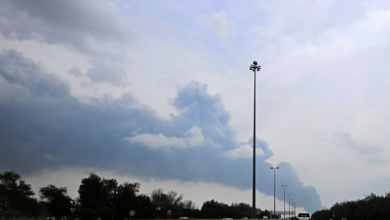
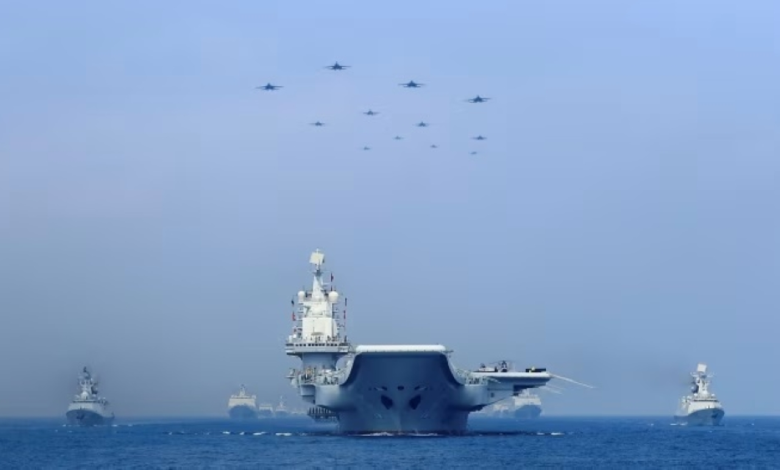
Taiwan's Ministry of National Defense reported unprecedented and intense military activity since mid-October 2024, with at least 130 Chinese military aircraft and more than 50 warships detected near the island. Taiwanese authorities also reported the launch of 27 missiles, which produced loud noises and white smoke in the sky, attracting the attention of residents and tourists.
In response, the Chinese military issued an official statement confirming that the ground forces of the People's Liberation Army's Eastern Theater Command had conducted successful long-range live-fire drills in the waters north of Taiwan, stressing that these maneuvers had accurately achieved their objectives.
Taiwan's position: Denial of the blockade and condemnation of the provocation
Taiwanese officials downplayed the impact of the exercises on the ground. Hsieh Jie-ching, an intelligence official at Taiwan's Ministry of National Defense, stated that the attempts to impose a blockade were unsuccessful, noting that the Taiwanese coast guard handled the situation and confirmed that no actual closure of the sea lanes occurred.
For his part, Taiwanese President Lai Ching-te strongly condemned China's actions, describing them in a statement as "a blatant provocation of regional security and the international order." Lai affirmed that his country is acting responsibly to avoid escalating tensions, accusing Beijing of deliberately undermining stability through military intimidation and disregarding the international community's aspirations for peace.
Context of tension and historical background
These exercises come amid a long history of tensions between the two sides. China considers Taiwan an integral part of its territory and vows to annex it, by force if necessary, while Taiwan maintains its self-governance and democratic system. In recent years, Beijing has intensified its military and diplomatic pressure, particularly in response to high-level visits between Taiwanese and Western officials, or following presidential elections on the island.
These exercises are a continuation of China’s “grey zone” approach, which aims to wear down Taiwan’s defenses and test its readiness without reaching the brink of all-out war, making the region one of the most geopolitically volatile hotspots in the world.
International reactions and strategic concerns
The military escalation has raised widespread concern in international circles, given the strategic importance of the Taiwan Strait, through which a huge percentage of global trade passes, in addition to it being a vital center for the semiconductor industry.
The European Union, along with France and Germany, expressed deep concern over the developments. EU foreign policy spokesperson Anita Heiber stated that peace in the Strait is a cornerstone of international security and prosperity, urging Beijing to exercise restraint. The German Foreign Ministry warned that these maneuvers escalate tensions and undermine regional stability, while Paris called on all parties to refrain from any provocative actions that could lead to an unforeseen conflict.