China warns solar energy companies against price manipulation and fraud

In a decisive move aimed at restoring stability to one of the world's most strategic sectors, China's market regulator issued a stern warning to solar energy companies, urging them to halt the destructive "price wars" plaguing the industry. The regulator cautioned companies against engaging in unfair pricing practices, such as collusion and fraud, which have led to a sharp decline in profit margins and threaten the sector's sustainability.
Context of the crisis: global dominance and a huge surplus
To understand the depth of these warnings, one must consider the broader context of China's solar industry. China is the world's largest manufacturer of solar panels and their components, controlling over 80% of global supply chains. Over the past few years, Chinese companies have poured massive investments, fueled by government support, resulting in an unprecedented production boom. However, this rapid expansion has led to a "capacity overhang" that far exceeds global demand, forcing companies to slash prices to record lows in an attempt to clear inventory. This has created a fiercely competitive environment that has negatively impacted product quality and profitability.
Government moves to regulate the market
The State Administration for Market Regulation clarified that it is intensifying strict oversight of product quality and cracking down on illegal activities to ensure fair market competition. These statements represent the latest in a series of government efforts to control pricing chaos and restore market equilibrium amidst mounting pressure on manufacturers facing the risk of bankruptcy.
The language of numbers: losses are shrinking but persist
Recent data presented by Wang Bohua, honorary chairman of a photovoltaic panel industry association in China, revealed a difficult financial situation, but one that has begun to show slight improvement. Losses in China's solar energy sector narrowed by 46.7% quarter-on-quarter in the third quarter, coinciding with government interventions. Despite this relative improvement, the sector is still struggling, with losses reaching approximately 6.422 billion yuan (US$911.9 million) between July and September.
Production restructuring and future constraints
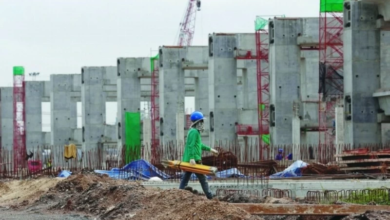
In response to these pressures, the industry has begun to reshape its priorities. Wang noted that the construction of new manufacturing capacity has seen a significant decline compared to last year. In the first ten months of this year, the industry reduced production of key raw materials such as polysilicon and silicon wafers by 29.6% and 6.7%, respectively, while production of finished products such as solar cells and prefabricated modules increased.
Looking ahead, Wang highlighted a package of stringent regulations scheduled to take effect in 2025, including energy consumption limits for polysilicon plants. These regulations aim to force older, less efficient plants to close, thereby reducing oversupply.
Expected global impact
These measures are of paramount international importance, as China's production capacity had reached levels sufficient to meet global demand by almost double, according to estimates from early 2025. The Chinese government's intervention is expected to stabilize global solar panel prices after a period of freefall, which could ease trade tensions with the United States and the European Union, who accuse China of flooding the markets with cheap products.