Christine Lagarde is considering resigning from the European Central Bank before 2027

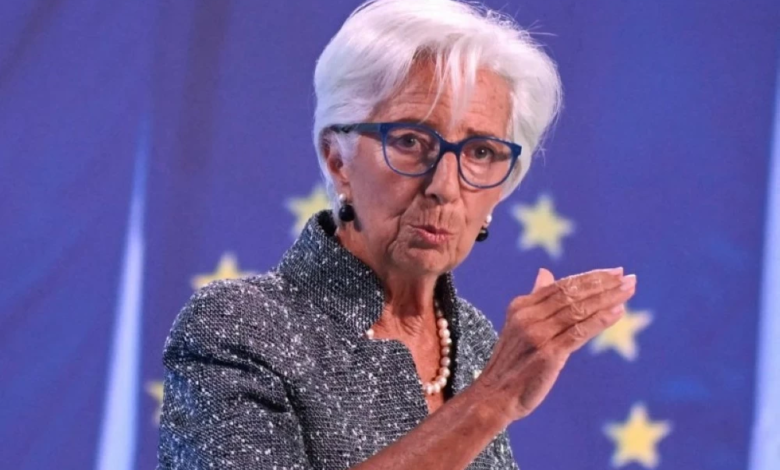
International media reports have revealed behind-the-scenes maneuvers within European monetary policy circles, with Christine Lagarde , President of the European Central Bank, considering a strategic option: stepping down before the end of her official term. According to the British newspaper, the Financial Times, this move aims to preempt upcoming political changes in France, ensuring a smooth transition of monetary authority free from the influence of extremist political currents.
Fear of a 2027 scenario and the far right
This news comes at a highly sensitive time for the European continent, as Lagarde's term officially ends on October 31, 2027. However, sources indicate that Lagarde prefers to leave before this date, specifically before the French presidential elections scheduled for April 2027. The main objective of this maneuver is to enable the current French President, Emmanuel Macron, to play a decisive role in choosing her successor before he leaves the Élysée Palace in May of the same year.
Moderate European circles fear that a victory for a far-right candidate, such as Marine Le Pen or her ally Jordan Bardella, could hinder the appointment of a technocratic figure committed to the principles of the European Union, potentially plunging the Eurozone into economic uncertainty.
The Franco-German axis and the future of the euro
Historically, the stability of the eurozone has depended on consensus between Paris and Berlin. Lagarde's proposed plan aims to ensure that the next president of the European Central Bank is chosen through close coordination between Macron and the incoming German leadership (likely to be led by the conservatives under Friedrich Merz). This coordination is crucial for maintaining the monetary policies that protect the single currency, especially given the geopolitical and economic challenges facing Europe.
Economic challenges and Lagarde's legacy
Christine Lagarde, 69, took over as head of the bank in November 2019, becoming the first woman to hold this sensitive position, succeeding Mario Draghi. During her tenure, she faced unprecedented challenges, beginning with the COVID-19 pandemic, which required a massive injection of liquidity, followed by a global inflation crisis that necessitated raising interest rates to record levels.
Economic analysts believe that an early resignation, if it were to occur, could be a double-edged sword. On the one hand, it would ensure the continuity of the bank's political approach, but on the other hand, it could unsettle financial markets, which prefer stability and adherence to official term limits. Nevertheless, protecting the central bank's independence from populist political pressures remains the top priority for policymakers in Brussels.
Potential candidates for the succession
Should the position become vacant, speculation begins, with Klaas Knot , governor of the Dutch central bank, and Joachim Nagel , governor of the German central bank, emerging as the leading candidates. The selection process remains governed by a delicate balance between the more conservative northern countries and the southern countries, making France's role in the appointment pivotal.
Despite these leaks, a spokesman for the European Central Bank denied that a final decision had been made, stressing that Lagarde was "fully focused on her duties." However, history teaches us that official denials are often part of managing the situation before major decisions are announced.