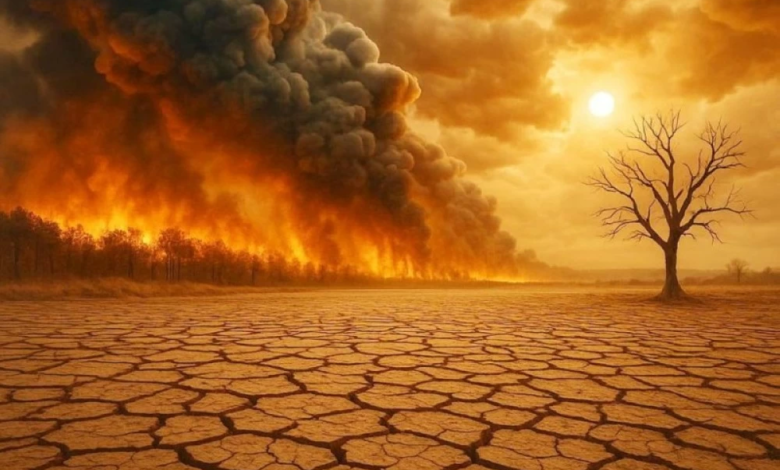

A recent and alarming study has revealed that climate change is no longer just a scientific warning about the future, but a painful economic reality that is inflicting enormous and shocking losses on humanity. This massive financial data provides a further and renewed incentive for governments and international institutions to accelerate their efforts to overcome this extreme climate situation.
Shocking figures from the Christian Aid report
According to a report by Christian Aid, the ten most devastating climate disasters alone cost the world more than $120 billion in 2025. The report, published by the British newspaper the Daily Mail and reviewed by Al Arabiya Business, indicated that the likelihood of these natural disasters has doubled due to severe climate change, and their destructive effects have intensified as a result of global warming caused by human activity.
The United States and Asia are in the eye of the storm
Data showed that the United States bore the brunt of the economic damage last year. The Palisades and Eaton fires ravaged Los Angeles in January, causing widespread destruction and material losses exceeding $60 billion , in addition to the human tragedy of 40 deaths.
Asia was not spared from this natural fury, as a series of devastating typhoons struck Southeast Asia, causing $25 billion . The human toll there was even more severe, with more than 1,750 people killed in Thailand, Indonesia, Sri Lanka, Vietnam, and Malaysia.
The gap between insured losses and economic reality
Scientists and economists warn that these figures ($120 billion) only reflect “insured losses,” meaning the true cost of climate-related disasters is likely much higher. Developing countries and impoverished communities often lack comprehensive insurance coverage, making their true losses invisible in some financial reports, even though they are the hardest hit in terms of infrastructure and livelihood destruction.
Scientific context: Why are disasters becoming more severe?
Scientists have amassed a vast body of evidence demonstrating a clear and undeniable link between rising global temperatures and increased disaster intensity. Historically, the Industrial Revolution and humanity's reliance on fossil fuels have raised average global temperatures by approximately 1.1 to 1.2 degrees Celsius compared to pre-industrial levels.
This rise in temperature leads to increased water evaporation, causing the atmosphere to hold more moisture, which explains the heavy rainfall, floods, and hurricanes in certain regions (as seen in Asia). Conversely, the same global warming draws moisture from the soil in other areas, creating ideal conditions for wildfires to break out and burn for longer periods (as seen in the United States and the United Kingdom).
A call for urgent climate action
The researchers also highlighted 10 other climate disasters that were less financially costly but no less devastating in terms of environmental and social impact, including the destructive wildfires that ravaged the UK this summer. These reports underscore the need for countries to adhere to their climate conference (COP) commitments to reduce carbon emissions and to activate loss and damage funds to help affected countries recover from disasters for which they bore no primary responsibility.