
As the countdown to the world's biggest football event accelerates, Mexican authorities have renewed their assurances to FIFA and the international community that security preparations for hosting the 2026 World Cup are proceeding according to a well-defined strategy, in order to dispel concerns arising from the recent wave of violence in some parts of the country.
Government assurances amid security tensions
Mexico has recently experienced significant security tensions following a military operation that resulted in the death of one of the most prominent leaders of criminal cartels, raising questions about the stability of the situation ahead of the tournament. In this context, Mexico received a high-level delegation from FIFA for intensive meetings with local officials to review logistical and security arrangements.
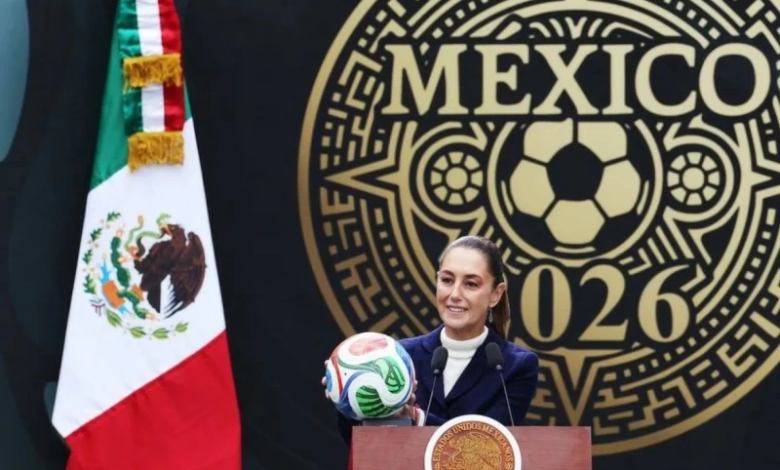
The Minister of Security and Citizen Protection, Omar García Harfuch, stated unequivocally: “The security of our citizens and visitors during the World Cup will be guaranteed.” He explained that meetings held under the direct guidance of President Claudia Sheinbaum brought together all relevant parties, including Gabriela Cuevas, the World Cup coordinator, and federal officials, to develop precise intelligence and security protocols.
Mexico has a long history of hosting the World Cup
Historically, Mexico boasts an unparalleled footballing legacy, poised to become the first nation in history to host the World Cup three times, following the 1970 and 1986 editions that saw the triumphs of football legends Pelé and Maradona. This legacy places a heightened responsibility on the Mexican government to maintain the country's reputation as a world-class sporting destination capable of organizing major events with excellence, despite internal security challenges.
The historic Azteca Stadium in Mexico City is scheduled to host the opening match of the Mexican national team against the South African national team, an event of great symbolic importance that requires exceptional security to ensure the safety of the tens of thousands of fans and VIPs in attendance.
Economic dimensions and regional cooperation
The 2026 edition is particularly significant as it is being co-hosted by an unprecedented trio: Mexico, the United States, and Canada. This collaboration necessitates stringent international security standards and cross-border coordination to ensure the smooth movement of fans and teams. Mexico is banking on this event to boost its tourism sector and attract foreign investment, as the tournament is expected to inject billions of dollars into the local economy, making security a paramount economic imperative, not merely a sporting requirement.
Readiness of host cities
Besides Mexico City, cities like Guadalajara and Monterrey are also preparing to host matches, with heightened security plans in place that include deploying additional forces and upgrading surveillance systems. FIFA President Gianni Infantino's statement that "everything is going well" reinforces confidence in Mexico's ability to overcome current challenges and deliver an exceptional World Cup.
In conclusion, Mexican President Claudia Sheinbaum stressed that the approved monitoring and inspection system is sufficient to ensure that no problems occur, affirming her country's commitment to making the 2026 World Cup a safe and successful celebration by all standards.