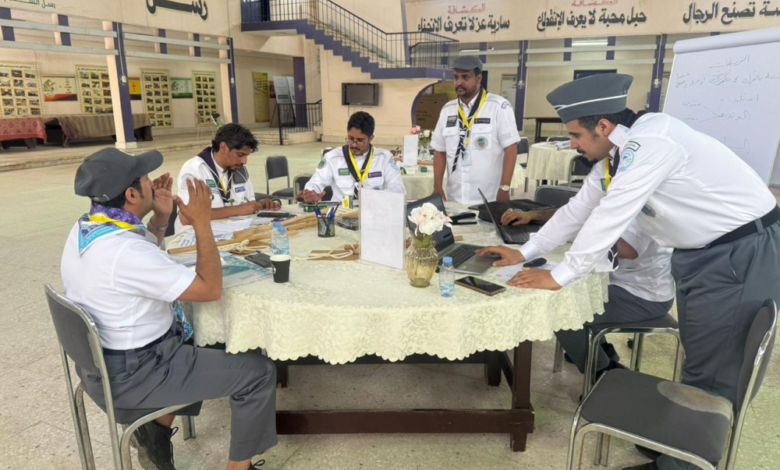

The General Directorate of Education in Najran, represented by the Student Activities Department, concluded the advanced Wood Badge training course, organized by the Ministry of Education under the supervision of the Saudi Arabian Scouts Association. The course saw the participation of 40 male and female scout leaders, as part of a strategic plan aimed at enhancing the skills of leaders in the educational and scouting fields.
The importance of the wooden badge and the general context
The Wood Badge is one of the most important leadership training programs in the global Scout Movement, symbolizing the completion of a Scout leader's qualifications and their ability to lead units with high efficiency. This training program in Najran is an extension of the historical efforts undertaken by the Saudi Arabian Scouts Association since its founding to develop national talent and keep pace with the latest global theories in training and leadership. These programs directly aim to achieve the goals of the Kingdom's Vision 2030 regarding the development of volunteer work and reaching one million volunteers, as Scout leaders are considered the cornerstone in organizing and managing volunteer teams during religious and national seasons.
Comprehensive and diverse training program
The study program included an intensive series of training sessions that combined theoretical and practical aspects. The sessions focused on deepening understanding of educational leadership concepts, reviewing modern leadership styles and theories, and providing a detailed explanation of the responsibilities and duties of a scout unit leader. Participants were also trained in strategic planning mechanisms, the characteristics of a successful plan, and innovative methods for training boys and young men that attract them to scouting and instill national values.
Field applications and navigation skills
The training wasn't confined to classrooms; it included a vital practical component: a field trip, a cornerstone of scouting tradition. During this trip, participants practiced advanced land navigation skills, including map reading and drawing, determining directions and estimations without relying on electronic devices, and using secret signs, codes, and encrypted messages. These activities aimed to foster self-reliance, teamwork, and the essential field skills needed by scout leaders in camps and expeditions.
Expected impact and resource development
The study also addressed important aspects related to developing the financial and human resources of scouting units, and preparing theoretical research that contributes to the development of the movement. This training is expected to have a positive impact on the educational field in the Najran region and the Kingdom in general, by graduating a generation of qualified leaders capable of activating the role of scouting in community service, crisis management, and active participation in national events, thus enhancing the quality of student activities and their educational outcomes.