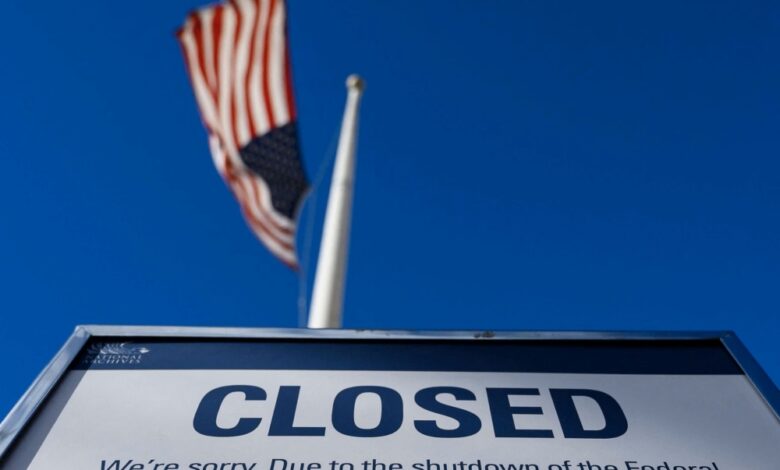

In a crucial step to end the government shutdown, the US Congress Tuesday in favor of a bill aimed at ending the budget impasse , following three days of political gridlock in Washington, D.C. This decision came after arduous and intensive negotiations between Republicans and Democrats, primarily focused on disagreements over funding for immigration policies and border enforcement demanded by Donald Trump.
Voting details and party division
The Republican-controlled House of Representatives passed the bill by a narrow margin of 217 to 214. The vote was marked by significant partisan divisions, with 21 Democrats joining their Republican colleagues in supporting the funding package, prioritizing the national interest and ending the shutdown. Conversely, a similar number of Republicans opposed the bill, rejecting the compromise and insisting on their demands for sweeping reforms to the Department of Homeland Security, reflecting the deep divisions even within the Republican Party.
Background to the crisis and the context of the government shutdown
This vote comes at a politically sensitive time, as Democratic refusal to fund Trump's immigration enforcement programs has stalled the budget process, leading to a partial 72-hour shutdown of federal agencies. Government shutdowns in the United States are far-reaching events, halting non-essential services and forcing federal employees to work without immediate pay or be furloughed, placing significant economic and social strain on the country.
Political maneuvering and the stance of the leadership
The final vote was preceded by intense political wrangling. The Republican president demanded that the House of Representatives end the shutdown “without delay.” For his part, the Republican Speaker of the House, Mike Johnson, expressed confidence that the crisis would be resolved, describing the vote as a “procedural formality” necessary to restore government operations. “We will get this all done by Tuesday,” Johnson said in remarks before the session. “I am confident of it.”.
On the other hand, the bill faced fierce opposition from hardline conservatives in Congress. Texas Republican Representative Chip Roy stated that “Democrats are playing politics,” accusing them of holding the Department of Homeland Security’s budget “hostage.” Funding for this department is considered the main stumbling block in the negotiations, especially given the tensions following the recent events in Minneapolis, which have overshadowed security spending priorities.
Expected impact and next steps
Trump is expected to quickly sign the bill into law, allowing federal agencies to resume normal operations. Ending the shutdown is of paramount importance not only domestically to ensure the continuation of government services and the payment of employee salaries, but also internationally, as global markets closely monitor the stability of the US economy and the ability of its legislative bodies to overcome financial disagreements and avoid default.