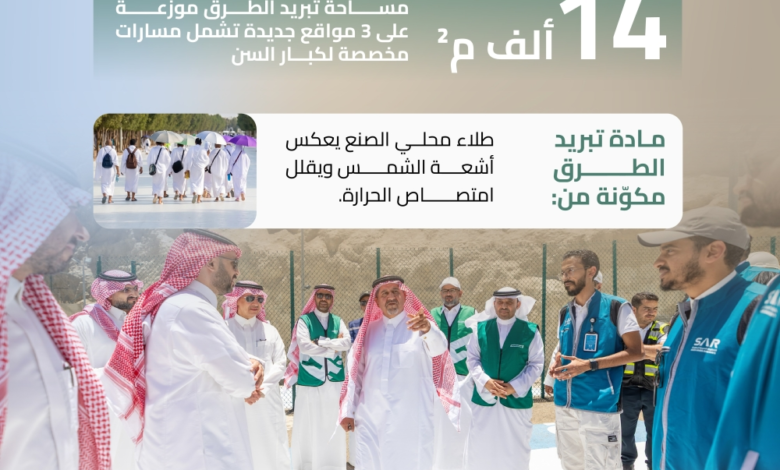

أعلنت الهيئة العامة للطرق في المملكة العربية السعودية عن خطوة مبتكرة تهدف إلى تحسين تجربة ضيوف الرحمن، حيث باشرت تنفيذ أعمال تقنية تبريد الطرق في محطات قطار المشاعر المقدسة. تأتي هذه المبادرة الاستراتيجية ضمن الاستعدادات المبكرة والمكثفة لموسم حج 1447هـ، وتشمل ثلاثة مواقع حيوية بمساحة إجمالية تقدر بنحو 14 ألف متر مربع، في مسعى جاد لرفع مستوى الراحة وتسهيل تنقلات الحجاج.
آلية عمل تقنية تبريد الطرق
وأوضحت الهيئة أن هذه التقنية الحديثة تسهم بشكل مباشر وفعال في خفض درجة حرارة سطح الطريق بحوالي 15 درجة مئوية. يعتمد هذا الابتكار البيئي على استخدام مواد طلاء متطورة وتقنيات هندسية حديثة تعمل على تقليل امتصاص الحرارة وعكس الإشعاع الشمسي. وينعكس هذا الإجراء الإيجابي على تحسين البيئة المحيطة في مواقع التنقل والمناطق ذات الكثافة العالية للمشاة، مما يوفر أجواء أكثر برودة وراحة للحجاج أثناء أداء مناسكهم.
السياق العام وتاريخ تطوير المشاعر المقدسة
تاريخياً، تولي حكومة المملكة العربية السعودية اهتماماً بالغاً بتطوير البنية التحتية للمشاعر المقدسة (منى، ومزدلفة، وعرفات). ومع تزامن مواسم الحج في السنوات الأخيرة مع أشهر الصيف شديدة الحرارة، برزت الحاجة الملحة لإيجاد حلول مستدامة لحماية الحجاج من الإجهاد الحراري وضربات الشمس. وقد شملت الجهود السابقة تركيب مراوح الرذاذ، وتوفير المظلات الضخمة، وتوسيع المساحات المظللة. ويُعد مشروع قطار المشاعر، الذي افتتح رسمياً عام 2010، أحد أبرز المشاريع التاريخية التي أحدثت نقلة نوعية في تفويج الحجاج وتقليل الاعتماد على الحافلات، مما ساهم في خفض الانبعاثات الحرارية والازدحام. وتأتي تقنية تبريد الطرق اليوم كامتداد طبيعي لهذا السجل الحافل من التطوير المستمر لخدمة ضيوف الرحمن.
أهمية الحدث وتأثيره المتوقع
تحمل هذه المبادرة أبعاداً وتأثيرات واسعة النطاق على عدة مستويات:
- التأثير المحلي: تعزز هذه الخطوة من مستويات الصحة العامة والسلامة لضيوف الرحمن، وتقلل من العبء على المنظومة الصحية خلال موسم الحج من خلال الحد من حالات الإعياء الحراري. كما تدعم مستهدفات رؤية السعودية 2030 في الارتقاء بجودة الخدمات المقدمة للحجاج والمعتمرين.
- التأثير الإقليمي والدولي: تُرسخ هذه التجربة مكانة المملكة كدولة رائدة عالمياً في إدارة الحشود وتوظيف التقنيات الحديثة للتكيف مع التغير المناخي. إن نجاح تطبيق مواد تبريد الطرق في بيئة قاسية ومزدحمة كالمشاعر المقدسة يقدم نموذجاً هندسياً وبيئياً يمكن تصديره أو محاكاته في مدن عالمية أخرى تعاني من ظاهرة “الجزر الحرارية الحضرية”.
أهداف برنامج قطاع الطرق ورؤية 2030
تعمل الهيئة العامة للطرق باستمرار على تطوير الأبحاث والتجارب العملية، انطلاقاً من دورها الحيوي كجهاز حكومي مشرف ومنظم لقطاع الطرق في المملكة. وتتماشى هذه المشاريع المبتكرة مع الأهداف الاستراتيجية لـ “برنامج قطاع الطرق”، والذي ينص بوضوح على تشجيع الابتكار والبحث العلمي. وتهدف الهيئة من خلال هذه الجهود إلى رفع مستوى جودة الطرق في المملكة للوصول إلى المؤشر السادس عالمياً، بالإضافة إلى تحقيق هدف طموح يتمثل في خفض معدل الوفيات الناجمة عن الحوادث إلى أقل من 5 حالات لكل 100 ألف نسمة بحلول عام 2030. وبذلك، يواصل قطاع الطرق دوره الريادي في تمكين العديد من القطاعات الحيوية والواعدة، ودعم التنمية المستدامة في البلاد.