Why does Cristiano Ronaldo talk to himself? Psychological analysis reveals the secret

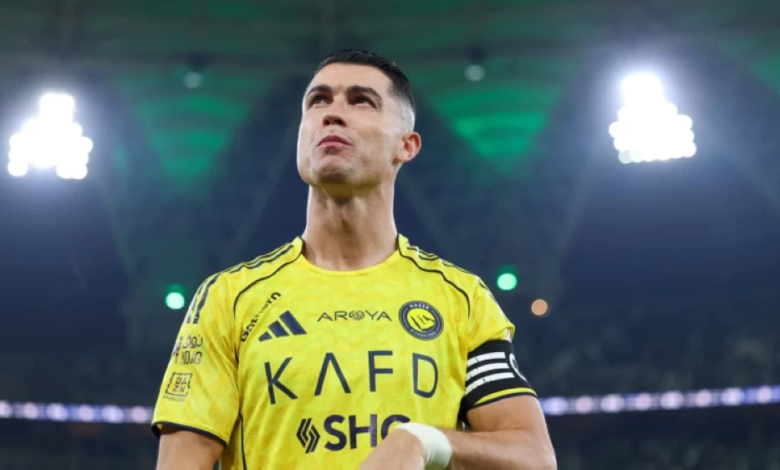
Portuguese legend Cristiano Ronaldo, captain of Saudi club Al-Nassr, has always captivated audiences not only with his decisive goals but also with his behavior on the pitch. Recently, his frequent appearances muttering inaudibly or talking intensely to himself during and after matches have sparked widespread questions among fans and analysts, amid speculation about the meaning behind this behavior.
The myth that never ages: The context of the ongoing challenge
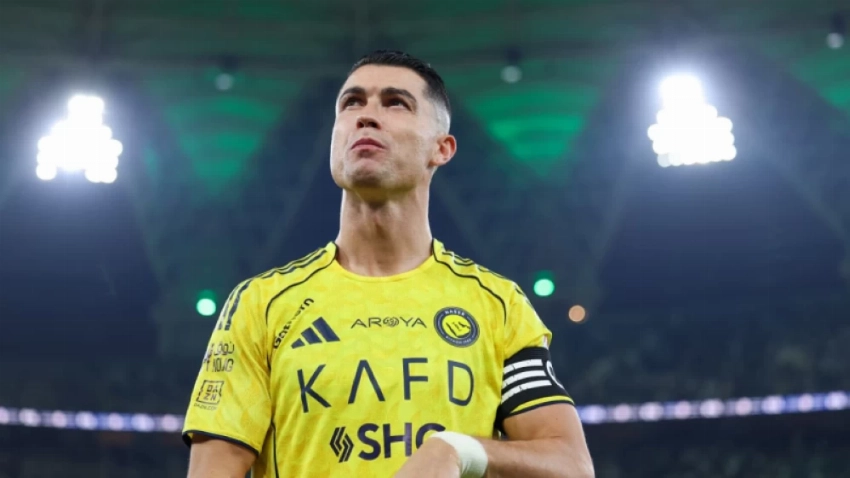
Cristiano Ronaldo is an exceptional case in the history of football. Even at nearly 41, he retains the passion of a player in his prime. This passion doesn't come from nowhere; it's the product of a long career marked by rigorous discipline and an unyielding desire to remain at the top. Historically, since his golden eras with Manchester United and Real Madrid, Ronaldo has been known for being the first to arrive at training and the last to leave, always striving for footballing perfection.
At his current club, Al-Nasr, Ronaldo bears a huge responsibility to bring the team back to the podium, which puts enormous psychological pressure on him that requires special handling mechanisms, and this explains the behaviors that the cameras have recently captured.
Psychoanalysis: Beyond Muttering
In exclusive statements to Okaz, Dr. Ahmed Salah El-Din Meliha, the former sports psychologist of Al-Ahli Saudi FC, deciphered the code behind this behavior. He emphasized that the fundamental difference between a star player and a legendary figure is no longer limited to physical skills such as shooting power or speed, but rather lies in "managing the mental battle.".
Dr. Ahmed explained that what the public perceives as tension or mental distraction is, in fact, the pinnacle of "self-control" in applied sports psychology. He pointed out that this behavior is scientifically known as "self-talk," and it is not a random reaction, but rather a sophisticated mental strategy employed by elite athletes worldwide.
Ronaldo's "mental operating system" functions
The psychologist explained that self-talk acts as a mental operating system that performs two essential functions for a player of Ronaldo's level:
- The directive function: This occurs in fractions of a second, where the player recalls technical and tactical instructions (such as adjusting the body angle before jumping for headers).
- The motivational function: It is the psychological fuel that the player pumps into himself to maintain emotional stability when the result is delayed or the team's level drops.
"Restructuring" strategy and getting back into the game
Dr. Ahmed Salah added that a player with an "internal control center," like Ronaldo, uses self-talk to instantly "reset" the pressure. This mechanism prevents the mind from dwelling on missed opportunities (the past) and forces it to focus immediately on the next attack (the present).
This behavior reflects what is called in sports psychology “cognitive restructuring”, where anger from a mistake is transformed into motor instructions to correct the course, protecting the player from psychological collapse and enhancing his ability to self-lead without waiting for external support.
Mental toughness: the secret to perseverance
The expert concluded by emphasizing that Ronaldo's internal monologues perfectly embody the concept of "mental toughness." At crucial moments in matches, these monologues become a shield, isolating the player from the noise of the crowd and the pressure of the score, thus keeping the flame of competition burning. It is not a sign of weakness, but rather the voice of a warrior who refuses to surrender—the very secret that has allowed Ronaldo to reign supreme in world football for over two decades.