Dammam and Khafji: Procedures completed for 973 stranded individuals in 10 minutes

The Kingdom of Saudi Arabia has once again demonstrated its exceptional ability to manage crises and complex logistical operations. King Fahd International Airport in Dammam a pivotal hub for humanitarian evacuations, forming, along with the Al-Khafji border crossing, a lifeline for thousands of Gulf citizens. This integrated system successfully accommodated 973 stranded individuals, completing their travel procedures and facilitating their return to their home countries in record time, amidst exceptional global circumstances that posed significant challenges to air travel and international movement.
High operational efficiency at King Fahd Airport
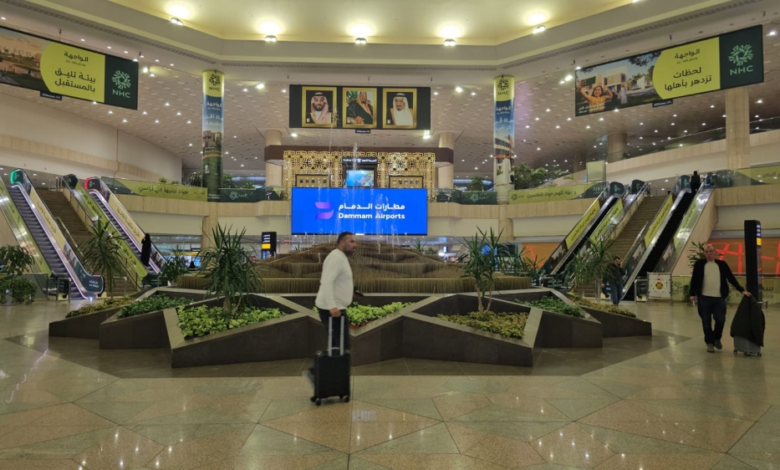
King Fahd International Airport in Dammam witnessed unprecedented operational activity, receiving a series of consecutive flights from various destinations. A Gulf Air flight from Jeddah, carrying 350 Bahraini and other Gulf passengers, led the way, followed by a Kuwait Airways flight with 158 passengers. The airport's efforts were not limited to regional flights; it also handled earlier international flights, including 105 passengers from India, 185 from London, and 175 from Manchester, demonstrating the airport's high level of preparedness to accommodate the simultaneous influx of passengers from multiple destinations.
Integrated logistics and accommodation services
In the interest of passenger comfort and safety, a comprehensive emergency plan was activated, including the establishment of fully equipped accommodation units within the airport premises. These units serve as rest and screening points upon passenger arrival, before they are transported via a fleet of dedicated and equipped buses to the land border crossings. This measure aims to ensure smooth passenger flow and prevent overcrowding, while providing all necessary comforts and care after their long journey.
Al-Khafji border crossing: Speed of completion and accuracy of performance
On the land side, the Al-Khafji border crossing is operating at full capacity to ensure the smooth passage of travelers. Twenty-seven different lanes are operational, including 17 lanes for arrivals and 10 lanes for processing departures to Kuwait. Customs and security procedures at the crossing are remarkably fast, with processing times for each traveler ranging from 5 to 10 minutes at most, reflecting the technological and administrative advancements at Saudi border crossings.
Strategic importance and humanitarian role
This event holds immense significance beyond simply transporting passengers; it underscores the pivotal role of the Kingdom of Saudi Arabia as a strategic and logistical depth for the Gulf Cooperation Council (GCC) countries. The successful integration of air transport in Dammam with land transport via Khafji affirms the robustness of Saudi infrastructure and its ability to adapt to unforeseen circumstances. This initiative also reflects the Kingdom's commitment to its humanitarian and fraternal responsibilities towards the citizens of the Gulf states. Upon their arrival in Dammam, the returning citizens expressed profound relief, considering their arrival on Saudi soil as a return to their own homelands, thus embodying the deep-rooted solidarity of the Gulf states during times of crisis.