The truth about Brozovic's expulsion against Neom and the Disciplinary Committee's opinion

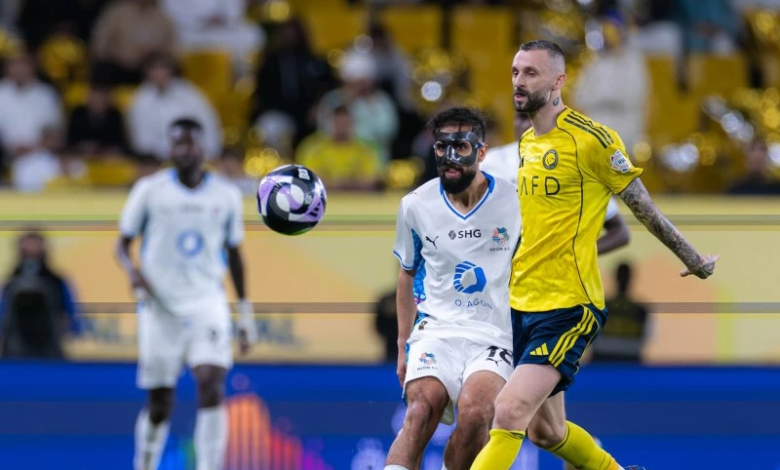
The controversial incident involving Croatian star Marcelo Brozovic , the Al-Nassr midfielder, and a Neom player sparked widespread debate in Saudi sports circles. The incident occurred during a match where Al-Nassr narrowly escaped a draw in the final moments. Brozovic made a reckless challenge on the opponent's leg, prompting many to call for a straight red card. However, referee Khalid Al-Turais opted to allow play to continue without taking any decisive action.
Analysis of the refereeing situation: Did Brozovic deserve to be sent off?
With the replay on television and video technology, criticism of the referee's decision intensified. In a technical analysis of the incident, Egyptian international refereeing consultant Tarek Sami told the Okaz newspaper that the situation warranted a straight red card. Sami explained, "What happened was violent play using excessive force; the correct decision should have been a direct free kick and a red card for the player for using a weapon under his boot in a dangerous area, putting the defender at risk of serious injury.".
Sami added, explaining why referees sometimes overlook such cases despite the presence of VAR technology: “Some referees may consider that the attacker did not come from a long distance or at high speed, and therefore the condition of excessive force is not met. But in this case, the conditions for a red card were met, as the player placed the weapon, the boot, on the opponent’s foot and rested on it with his body weight, which makes it a clear case of a red card.”.
Legal context: Limits of the Disciplinary Committee's powers
The most prominent question on the minds of the fans right now is: Can the Disciplinary and Ethics Committee of the Saudi Arabian Football Federation intervene to punish Brozovic retroactively?
Legally, and based on applicable international and local regulations, disciplinary committees typically do not intervene in technical decisions made by the referee on the field (such as fouls, yellow cards, and red cards related to contests for the ball), as long as the referee has seen and assessed the incident, even if their assessment was incorrect. Intervention is generally limited to two cases:
- If the refereeing team did not notice the incident at all and it was not recorded in the report.
- If the incident falls under the category of “violent conduct” and not “serious foul play”.
In this regard, refereeing expert Tarek Sami explained the fundamental difference, saying: “The Disciplinary Committee intervenes in cases of misconduct, which occurs during stoppages in play or away from competition for the ball. As for Brozovic’s case, it falls under violent play during competition for the ball, and therefore the Disciplinary Committee has no right to intervene in it, and the matter is left to the discretion of the on-field referee and the video technology during the match.”.
The importance of the event and its impact on the sports scene
This incident is particularly significant given Marcelo Brozovic's status as a key player in Al-Nassr's lineup, and any potential absence could disrupt the team's balance in upcoming matches. This controversy also reignites discussions about the performance of local referees and the use of VAR, as well as the ongoing calls for standardized criteria for determining dangerous fouls to protect players from injuries.
Ultimately, this case remains a recurring lesson in the world of football about the gray area between the referee's judgment and the letter of the law, where the final decision remains dependent on what referee Khaled Al-Turais recorded in his official match report, amid anticipation of what the coming days will reveal in terms of official clarifications.