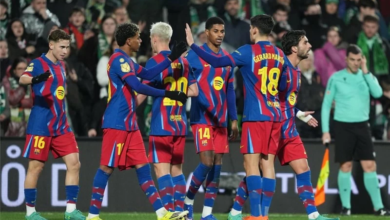
The death of player Youssou Diouf shakes the Senegalese league – details of the incident

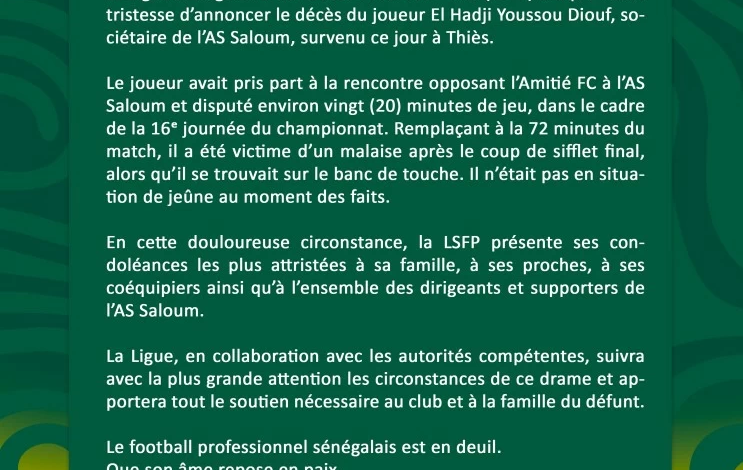
A pall of deep sorrow descended upon the sporting community in Senegal and across the African continent following the official announcement of the death of young player Youssou Diouf , a striker for the Saloum team, in a tragic accident that occurred immediately after the final whistle of his team's match in the local league. This news came as a profound shock to fans and his teammates, once again highlighting the sudden health risks that athletes can face.
Details of the final moments in the life of Youssef Diouf
The tragic incident occurred at the Manyang Soumare Stadium in Thiès, Senegal, during a match between Saloum FC and Amété FC, in the sixteenth round of the Senegalese league. The match, characterized by its competitiveness and cautious defensive play, ended in a goalless draw (0-0), but the result was not the most significant event of the day.
According to official reports, the late Youssou Diouf, 25, did not start the match but came on as a substitute in the 72nd minute, playing the final minutes. After the final whistle, as the players were preparing to leave, Diouf suffered a sudden health problem and collapsed on the bench, passing away to everyone's shock.
Statement from the Senegalese League and the truth about the player's fasting
The Senegalese Football Federation quickly issued an official statement via its X account (formerly Twitter), mourning the player and offering condolences to his family and Saloum FC. The statement included an important clarification to dispel any doubts surrounding the cause of death and its relation to fasting. The Federation confirmed that the player was not fasting at the time of the incident, thus refuting speculation linking exhaustion to fasting.
The phenomenon of sudden death in football stadiums
The death of Youssou Diouf has reopened a sensitive and painful issue in the world of football: the phenomenon of "sudden death" among young athletes. Despite the high level of physical fitness enjoyed by footballers, similar incidents have occurred on the world's pitches in recent years, prompting FIFA and continental federations to tighten procedures for regular cardiovascular checkups.
This incident serves as a stark reminder of the need to provide advanced medical equipment and ambulances equipped with cardiac resuscitation devices in all stadiums, whether in major leagues or lower divisions, to ensure rapid intervention in such critical situations.
Senegalese and African fans reacted widely to the news, with social media platforms turning into a book of condolences, praying to God to have mercy on the deceased, and at the same time demanding more health care for players in local leagues.