
A noticeable decline in global and local gold prices
Gold prices witnessed significant shifts in global and local markets today (Monday), with the price per ounce falling below the $5,000 mark. Specifically, gold prices declined to $4,967 per ounce, losing approximately $58 in value, representing a drop of 1.15%. This decline reflects a state of anticipation in global financial markets amidst changes in major economic indicators.
Details of gold prices in the local market
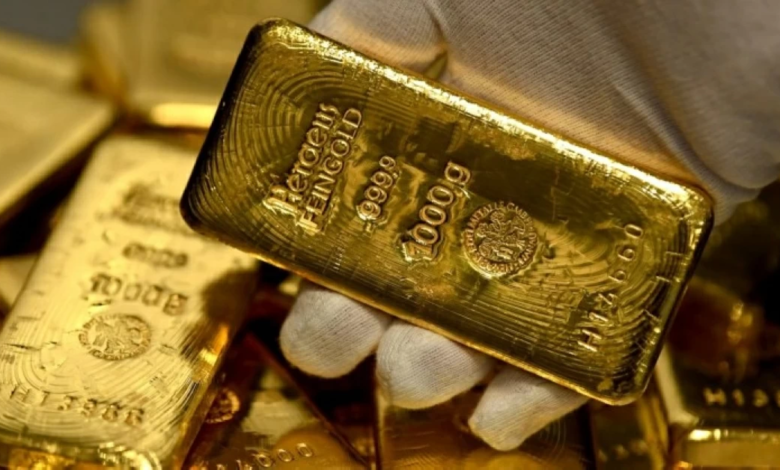
Locally, this global decline was directly reflected in the gold markets. The price of a gram of pure 24-karat gold (999.9% purity) fell to 599 riyals. This karat is commonly sold in the form of gold bars intended for savings and investment. These bars are characterized by the absence of value-added tax and high manufacturing fees, with a nominal fee of approximately 50 riyals added for stamping each bar, making them a preferred option for investors.
In a related development, with the price of an ounce of gold at $4,967, other purities also saw similar declines. The price of a gram of 18-karat gold fell to 449 riyals, before accounting for manufacturing fees, profit margins, and value-added tax. 18-karat gold, which has a purity of 75% and is designated by the symbol 750, is often sold in the form of various gold jewelry pieces to suit different tastes. As for a gram of 21-karat gold, which is the most popular and in-demand in the region, with a purity of 88% (designated by the symbol 875), its price before tax and manufacturing fees reached approximately 524 riyals, and it is usually sold in the form of gold jewelry or investment coins.
General context and historical background of the yellow metal
Historically, gold has been considered a safe haven for investors during times of economic and geopolitical crisis. However, the price of the precious metal is highly sensitive to fluctuations in major currencies, particularly the US dollar, as well as central bank interest rate policies. The current decline follows a series of strong gains for gold since last year, driven by fears of economic recession and global tensions that prompted investors to hedge against the effects of the gold market.
The importance of the event and its expected economic impact
Internationally, this decline coincides with the strengthening of the US dollar, given the historical inverse relationship between gold and the dollar. Furthermore, rising global oil prices have renewed concerns about persistently high inflation. These factors combined have diminished investor expectations that the US Federal Reserve will cut interest rates in the near term, making yield-bearing assets like bonds more attractive than gold, which does not offer a fixed return.
At both the regional and local levels, the decline in gold prices presents a golden opportunity for individual consumers and investors to increase their holdings of the precious metal, whether for adornment through the purchase of jewelry or for hedging and saving through the acquisition of bars and coins. Furthermore, the stability of local markets and pricing transparency enhance buyer confidence in capitalizing on these price drops to build balanced investment portfolios that protect them from future inflation fluctuations, which positively impacts sales in the gold and jewelry retail sector.