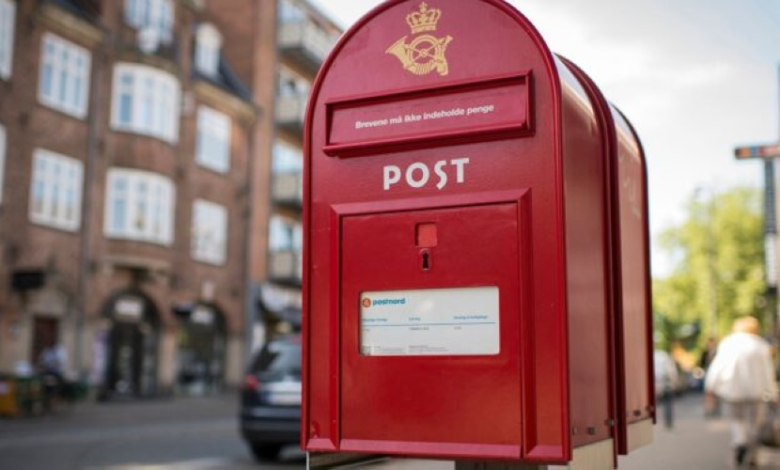

The Kingdom of Denmark is preparing to close a long-standing chapter in its social and service history, a move that reflects the accelerating pace of digital transformation worldwide. Authorities have announced plans to discontinue the public postal service provided by the Danish postal company, PostNord, thus ending an era of more than 400 years of delivering paper letters to citizens' homes.
A historic decision by 2026
According to official reports, the universal mail delivery service will cease on January 1, 2026. As part of this radical shift, the company will remove approximately 1,500 of the iconic red mailboxes that have long been a fixture of Danish streets. PostNord justified this decision by citing the sharp and continuous decline in mail volume, a consequence of Denmark's near-total reliance on digital communication.
Roots stretching back to 1624
To understand the magnitude of this change, one must consider the historical depth of this service. The Danish postal service was founded in 1624 by order of King Christian IV and was then the sole lifeline for communication and the dissemination of royal decrees and news across the country. Over four centuries, the service evolved from horse-riding messengers to a complex logistical network, becoming a symbol of national sovereignty and social cohesion.
Digitalization is creating a new reality
This decision didn't come out of nowhere; it's a natural consequence of Denmark being one of the world's most advanced countries in e-government and digitalization. Danish citizens now rely almost entirely on the government's digital mail system to receive correspondence from banks, hospitals, and government institutions. This shift has made maintaining a large, traditional postal network extremely difficult and economically unviable, transforming paper mail from an essential service into a rare practice.
Impact of the decision and the future of services
While this decision represents a leap into the future, it raises questions about the cultural impact of the disappearance of handwritten letters and how to meet the needs of less tech-savvy groups, such as the elderly. However, indicators suggest that the parcel delivery sector will continue to thrive, driven by e-commerce, while the traditional paper letter will become a part of Denmark's historical memory, preserved in museums rather than red mailboxes.