Danish Foreign Minister: Greenland's crisis with Washington is not over yet

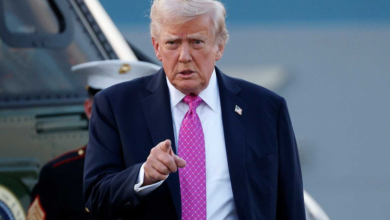
Danish Foreign Minister Lars Løkke Rasmussen confirmed that diplomatic tensions with the United States over Greenland have not completely ended, despite significant progress in recent talks. His remarks followed renewed US interest, under President Donald Trump, in bolstering its influence on the Arctic island for national security reasons.
Developments in the diplomatic situation in Nouakchott
In a press statement from the Greenlandic capital, Nuuk, Rasmussen explained that the current situation is much better than it was several weeks ago, noting that the dialogue has moved from a phase of threats to one of constructive negotiation. Rasmussen said, "We are not out of the woods yet, and we haven't reached a final solution, but we are moving in a more positive direction.".
This shift comes after a preliminary agreement on a "framework" reached in coordination with NATO Secretary General Mark Rutte, which helped to calm fears of unilateral steps that Washington might take.
The strategic importance of Greenland: a historical and geopolitical context
To understand the depth of this crisis, one must consider Greenland's sensitive geopolitical location. The island is a vital gateway to the Arctic, a region experiencing escalating international competition among major powers (the United States, Russia, and China) due to melting ice that is opening new shipping lanes and revealing vast natural resources.
Historically, Washington's interest in Greenland is not new. The United States attempted to purchase the island in 1946 under President Harry Truman, and President Trump revived the idea during his first term in 2019, sparking a diplomatic crisis. The island hosts Thule Air Base, a cornerstone of the US and NATO missile early warning system, making maintaining influence there a top priority for the Pentagon.
Red lines and national sovereignty
For her part, Greenland's Foreign Minister, Viviane Motseveldt, welcomed the start of a trilateral "direct dialogue" (between the United States, Denmark, and Greenland), describing the talks as characterized by mutual respect. However, both Denmark and Greenland emphasized that sovereignty and territorial integrity constitute a "red line" that cannot be crossed.
A joint working group was formed to discuss US security concerns, which focus on preventing any hostile influence in the Arctic region. Rasmussen noted that clearly defining these red lines before the start of talks is a positive sign that compromises can be reached that safeguard Washington's security interests without infringing on the sovereignty of Copenhagen and Nuuk.
Denial of trade war
In a related development, the Danish Foreign Minister denied any link between the crisis and economic issues, emphasizing that there was no "trade war" with Europe over this matter. He explained that all parties agreed on the need to resolve the dispute through normal diplomatic channels, avoiding economic escalation.
The situation remains open to all possibilities, as Denmark seeks to balance its obligations as a strategic ally of the United States within NATO, with its duty to protect its territorial sovereignty and the self-governance rights of the people of Greenland.