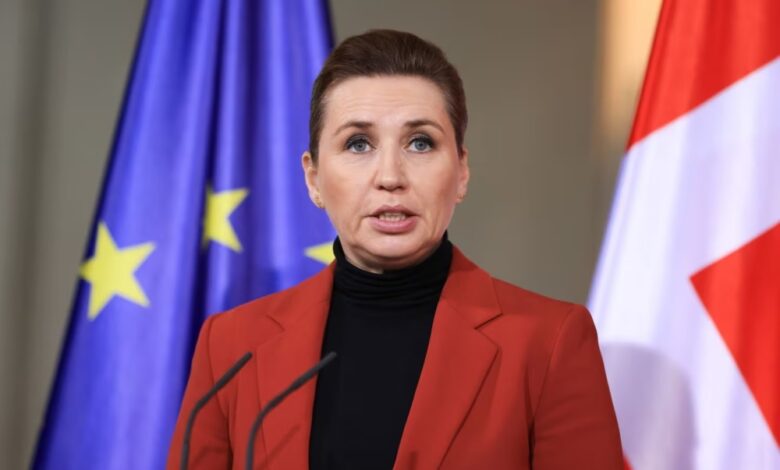
In a significant development in transatlantic relations, Danish Prime Minister Mette Frederiksen confirmed a "fundamental" and deep disagreement with the United States over Greenland. These strong statements, which revealed the continued US desire to control the self-governing Arctic island, came after a high-level meeting at the White House that brought together officials from Denmark, Greenland, and the United States.
Despite the apparent diplomatic agreement to establish a joint "working group," Frederiksen was decisive in describing the situation, noting that this procedural step does not change the fact of the unwavering American ambition to extend influence and control over the island, describing the matter as a "serious issue" that requires continued Danish efforts to prevent this scenario from becoming a tangible reality.
Strategic importance and historical background
American interest in Greenland is not a recent phenomenon, but rather has deep historical and geopolitical roots. In 1946, US President Harry Truman offered to buy the island from Denmark for $100 million in gold, given its vital strategic location in the face of the then-Soviet Union. Today, the island's importance is amplified by the escalating international competition in the Arctic region. Greenland possesses vast reserves of rare earth minerals and is considered a gateway to controlling new shipping routes that may open up due to climate change and melting ice.
The island already hosts the U.S. Thule Air Base, the northernmost U.S. military base, and plays a pivotal role in the missile early warning and space surveillance system, which explains the continued U.S. insistence on strengthening its influence there beyond a mere traditional military presence.
Diplomatic talks failed
Behind-the-scenes details of Wednesday's meeting at the White House revealed a significant gap in viewpoints. Danish Foreign Minister Lars Løkke Rasmussen stated that the meeting ended in fundamental disagreement, confirming the Danish side's failure to change American convictions. Rasmussen said clearly, "We were unable to change the American position. It is clear that the president has a desire to invade Greenland (politically or strategically), and we made it very clear that this is not in the Kingdom's interest.".
The Danish Prime Minister praised the firm stance taken by the Danish and Greenland ministers during the meeting, which she described as "not easy," appreciating their clear and firm response to the American proposals that infringe on national sovereignty.
Military reinforcements and security dimensions
In an escalation to assert its sovereignty, Denmark announced it would send military reinforcements to Greenland. These moves are backed by pledges from other European countries to send military missions to support Copenhagen, reflecting European concern over American dominance in the Arctic region.
Frederiksen explained that there is a consensus within NATO on the need to strengthen its presence in the Arctic Circle to ensure both European and North American security, but under a framework of joint cooperation, not unilateral control. She emphasized that Denmark has invested heavily in developing its new Arctic capabilities, and thanked the allied nations currently participating in joint exercises around Greenland, sending a clear message that the island is an integral part of Danish and European national security.