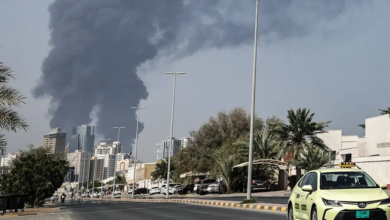
106 Iranian missiles and 176 drones destroyed | Details of the interception

Introduction to recent security developments
Amid escalating tensions in the Middle East, significant security and military developments have emerged, including the announcement of the destruction of 106 missiles and 176 drones since the start of the Iranian offensive. This development reflects the scale of the military escalation in the region and highlights the high efficiency of the defense systems and regional and international alliances working around the clock to ensure the security and stability of the airspace and territorial waters.
General context and historical background of the escalation
These precise statistics on the destruction of 106 missiles and 176 drones come amid a series of geopolitical tensions that have gripped the region for months. The military strategy of Iran and its allies has increasingly relied on the use of suicide drones, such as the Shahed model, in addition to ballistic and cruise missiles. This shift in military tactics aims to overwhelm air defenses and launch attacks from a distance. In this context, the Kingdom of Bahrain plays a pivotal strategic role, hosting the headquarters of the US Fifth Fleet and Combined Maritime Forces (CMF), making it a key hub for coordinating defense operations, monitoring air and maritime threats, and intercepting projectiles that threaten regional security.
The importance of the event and its regional impact
At the local and regional levels, the success of the defense systems in intercepting this massive number of missiles and drones sends a reassuring message to the people of the region and underscores the readiness of the armed forces and defense alliances to deal with any emergency. Furthermore, neutralizing these threats prevents significant loss of life and damage to vital infrastructure, including oil facilities and ports, which are the lifeblood of the regional economy.
International influence and protection of navigation
On the international level, destroying these missiles is of paramount importance to global shipping and international trade. The Arabian Gulf, the Red Sea, the Strait of Hormuz, and the Bab el-Mandeb Strait are strategic waterways through which a significant portion of the world's energy supply passes. Any Iranian threat or aggression in these areas directly impacts global oil markets and supply chains. Therefore, joint defense efforts launched and coordinated from strategic bases in the region contribute to the stability of the global economy and prevent the region from sliding into a full-blown regional war.
Defense technology and international cooperation
The ability to destroy 106 missiles and 176 drones would not have been possible without relying on the latest military technologies, such as the Patriot and THAAD systems, in addition to naval destroyers equipped with the Aegis Combat System. This integration of land, sea, and air radars, and the close cooperation between allied nations, demonstrates that regional security is a shared responsibility that requires constant vigilance and continuous modernization of military capabilities to counter the growing unconventional threats.