Diplomatic crisis between France, the US and Italy over the killing of a right-wing activist

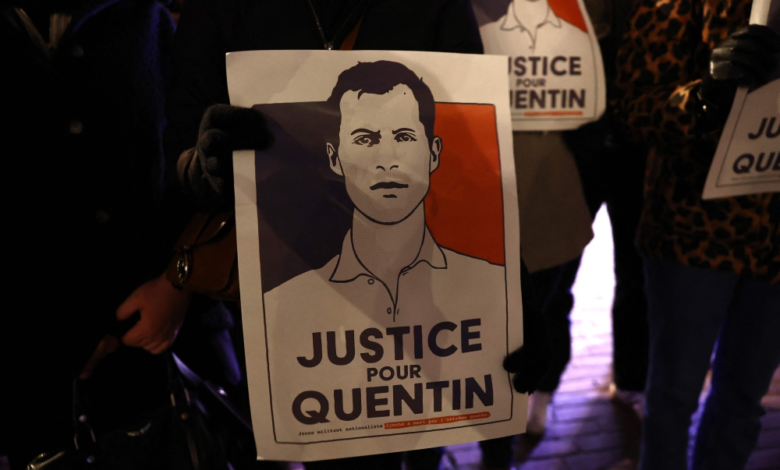
The international arena has witnessed unprecedented diplomatic tension in recent hours between Paris on one side, and Washington and Rome on the other, following the killing of a young right-wing activist in France. A local criminal incident has transformed into a global public opinion issue, prompting direct interventions from the administration of US President Donald Trump and Italian Prime Minister Giorgia Meloni, which in turn led the French presidency to respond firmly in defense of its internal sovereignty.
The spark that ignited: American accusations and a French response in numbers
The crisis began when the administration of US President Donald Trump condemned what it called "terrorism" in France, warning of a rise in left-wing violence. This followed the brutal beating death of far-right activist Quentin Duranc, 23. Sarah Rogers, Under Secretary of State for Public Diplomacy, stated that Duranc's murder raised questions about how to deal with "political violence and terrorism," adding in a controversial tweet on the X platform: "Once you decide to kill people for their opinions rather than persuade them, you have chosen to leave the realm of civilization." She affirmed that Washington would continue to monitor the situation.
Paris was quick to respond, with the official “France Response” account posting official statistics comparing murder rates between the two countries, explaining that rates in the United States far exceed those in France. The account commented with a sarcastic remark mimicking the American statement: “We will continue to follow this issue,” referring to the problems of domestic violence in America.
Details of the incident and the tense internal context
The incident occurred last week in Lyon (southeastern France), where Quentin Duranc died from severe head injuries. According to reports, the young man was violently attacked by a group of at least six people on the sidelines of protests against a conference attended by European Parliament member Rima Hassan, a member of the radical left-wing party La France Insoumise (France Unbowed). The French Foreign Office's counter-terrorism unit issued a statement warning that "violent left-wing extremism is on the rise," considering the incident a serious threat to public safety.
Internationalizing the issue: Meloni intervenes and Macron is furious
The controversy wasn't confined to the Franco-American axis; it extended to Italy. Italy's right-wing Prime Minister, Giorgia Meloni, described the killing of the French activist as "a wound for all of Europe." This statement provoked a strong reaction from French President Emmanuel Macron, who strongly criticized what he considered interference in French domestic affairs and an attempt to exploit a human tragedy for cross-border political purposes.
Implications of the crisis and its political dimensions
This three-way debate reflects the sharp political polarization currently gripping the West between populist right-wing movements and liberal and left-wing currents. Observers note that the Trump administration and Meloni's interest in this incident stems from a desire to reinforce the narrative of the "radical left's threat," a highly sensitive issue in current European and American politics. Meanwhile, Paris seeks to emphasize that its judicial and security institutions are capable of handling domestic crimes without external interference, attempting to prevent the incident from becoming fuel for international ideological conflicts.