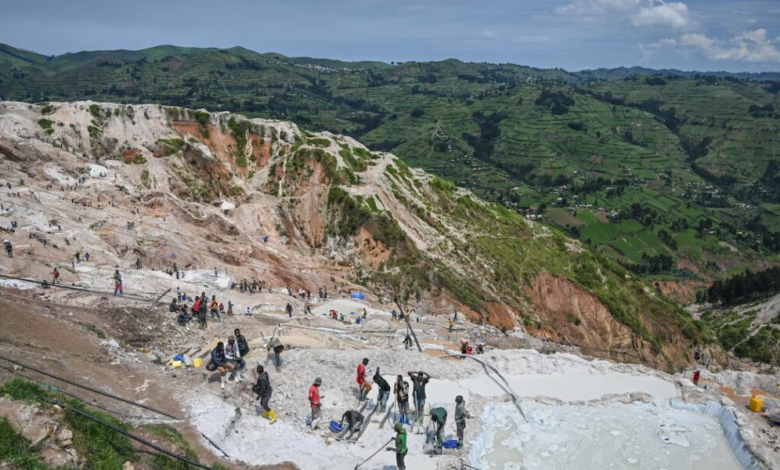

The Kinshasa government issued an urgent appeal to the international community on Sunday, urging it to "fully grasp the magnitude of the tragedy" unfolding in the east of the country, following a devastating landslide at the Rubaya mine. In an official statement, the government asserted that the disaster was not merely an accident, but a direct consequence of what it termed the "armed occupation and systematic looting" perpetrated by the M23 rebel movement, with the support of neighboring Rwanda.
Fears of hundreds of victims trapped under the rubble
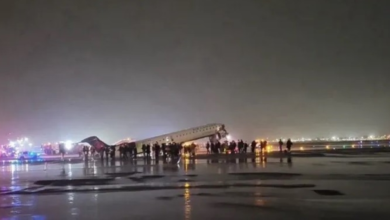
The Democratic Republic of Congo has expressed grave concerns that at least 200 people may have died in a massive landslide that struck the Rubaya mining site last Wednesday. This strategic site is controlled by the M23 (March 23 Movement) in the country's troubled east. Initial reports indicate that part of a mountain slope in the sprawling mining area collapsed, followed by another landslide on Thursday morning, complicating the rudimentary search and rescue efforts.
With communication networks disrupted and the government administration and civil society organizations fleeing the area, the rebel-appointed governor of North Kivu province, Eraston Bahati Musanga, stated that estimates indicated 200 people had been killed, a toll that could not be confirmed by independent sources due to the isolation imposed by the armed movement.
Rupaia: The nerve center of global technology in the hands of rebels
The importance of this event extends beyond the humanitarian aspect to encompass the global economy. The Rupaia mine is one of the world's most important, producing between 15% and 30% of the world's total coltan output. This rare mineral is the source of tantalum, a vital element essential in the manufacture of electronic capacitors used in smartphones, laptops, and electric vehicles.
Geological estimates indicate that eastern Democratic Republic of Congo contains enormous reserves ranging between 60% and 80% of the world's coltan stocks, making the region a constant flashpoint for control of these precious resources.
Parallel administration and war economy
Since seizing control of the region in April 2024 and consolidating its power in January 2025, the M23 movement has established what UN experts have described as a "parallel state administration." The movement has created its own Ministry of Minerals, issuing permits to miners and imposing exorbitant taxes. According to experts, these activities generate hundreds of thousands of dollars monthly, providing a vital financial lifeline for the movement's military operations and arms purchases, thus prolonging the three-decade-long conflict.
tense regional context
This incident further exacerbates tensions between Kinshasa and Kigali, as the Congolese government, the United Nations, and Western countries accuse Rwanda of providing military and logistical support to the M23 movement to plunder Congo's mineral wealth—allegations Rwanda consistently denies. North Kivu is plagued by chronic instability, with dozens of armed groups vying for power and resources. Civilians and traditional miners bear the brunt of the suffering, working in conditions that lack even the most basic safety standards.