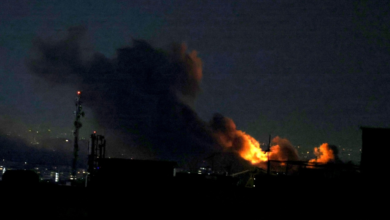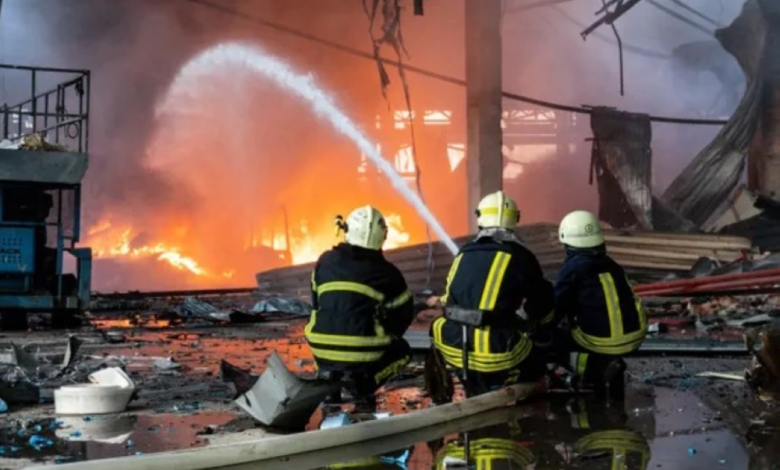

The United Nations on Thursday issued a clear and urgent appeal to Russia to halt its ongoing attacks on energy facilities and sites in Ukraine, following a large-scale overnight attack that plunged an entire city into darkness and deprived thousands of civilians of basic heating in harsh weather conditions.
Violation of international humanitarian law
In an official statement, the UN High Commissioner for Human Rights, Volker Türk, expressed his deep concern over the recent escalation. Türk stated, "Last night, the Russian Federation launched a large-scale attack targeting energy infrastructure across Ukraine. Thousands of civilians awoke to find themselves without electricity or heating." The UN official emphasized that "targeting civilian infrastructure is prohibited under international humanitarian law," and called on the Russian Federation to immediately cease these attacks, which are exacerbating the suffering of the population.
Winter as a weapon of war
These attacks come at a particularly critical time, as Ukraine faces one of its coldest winters since the start of the war. International experts and observers point out that targeting power grids is not merely a military act, but also has catastrophic humanitarian consequences. Power outages disrupt water supplies and vital healthcare services, putting the lives of the most vulnerable, such as children and the elderly, at grave risk. While the strategy of striking energy infrastructure is seen as an attempt to exert pressure on the Ukrainian home front, it has drawn widespread international condemnation due to its direct impact on innocent civilians.
Nuclear tension in Zaporizhia
On the other side of the conflict, and in a related energy matter, Moscow announced that Ukrainian strikes had severed one of the power lines supplying the Zaporizhzhia nuclear power plant, which is controlled by Russian forces in southern Ukraine. This plant is the largest in Europe and has been a source of international concern since the beginning of the conflict.
Russian officials managing the plant stated via Telegram that "following an attack by Ukrainian armed forces on the Energodar industrial zone, vital facilities in the city and at the Zaporizhzhia nuclear power plant were damaged." Despite Moscow's assurances that there is no immediate radiation risk, the recurring incidents around the plant are renewing global fears of a potential nuclear disaster with repercussions extending to neighboring countries, necessitating international intervention to ensure the safety of nuclear facilities and their protection from military operations.
The situation on the ground remains highly complex as military operations continue, amid persistent international calls for the protection of civilians and the sparing of vital infrastructure from the ravages of bombing, in order to ensure the minimum requirements for life in light of the ongoing conflict.