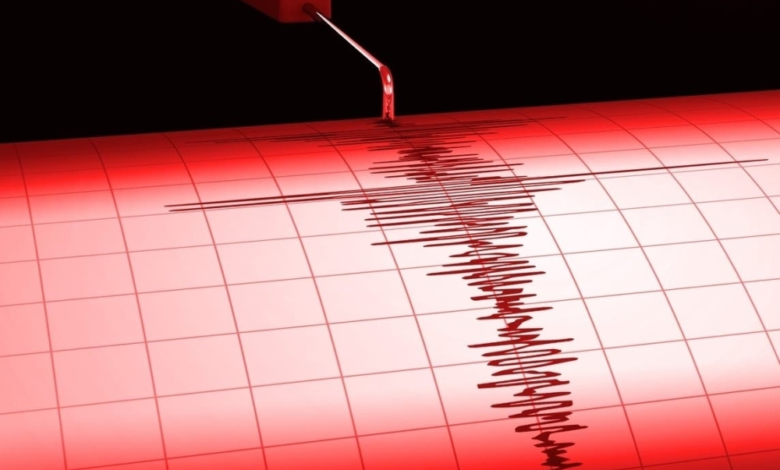

Indonesia experienced another geological event today, sparking widespread concern. A powerful earthquake measuring 6.0 on the Richter scale struck Java, one of the most densely populated areas in the Indonesian archipelago. The tremor, which was recorded by seismic monitoring stations worldwide, has brought back to mind the region's active geological nature.
Details of the earthquake and its geographical location
According to data from the German Research Centre for Geosciences (GFZ), the earthquake occurred early this morning, with its epicenter located near the city of Ponorogo in East Java province. Technical data indicates that the earthquake struck at a very shallow depth of only 10 kilometers below the Earth's surface.
Experts in seismology believe that shallow earthquakes (those close to the surface) are often more dangerous and impactful than deep earthquakes, as seismic energy travels faster and more strongly to the surface, which can lead to violent tremors that are clearly felt by the population, even if the magnitude is relatively moderate.
Indonesia and the "Ring of Fire": An Important Geological Context
This earthquake is not an uncommon occurrence in Indonesia, as the vast archipelago nation lies above the Pacific Ring of Fire. This region is a broad arc of volcanoes and fault lines that encircle the Pacific Ocean basin, making it the most seismically and volcanically active area in the world.
Because of this unique geographical location, Indonesia is regularly subjected to earthquakes ranging from mild to devastating, as a result of the movement and constant collision of tectonic plates beneath the Earth's crust in that region.
History of seismic activity and safety measures
Indonesia has a long history of natural disasters linked to earthquakes and tsunamis, keeping local authorities and international organizations on constant alert. Although the current earthquake, measuring 6.0 on the Richter scale, is considered strong, there have been no immediate reports of casualties or significant damage to infrastructure.
In such cases, specialized agencies usually warn of the possibility of aftershocks following the main earthquake, urging residents in areas near the epicenter to be cautious and stay away from cracked buildings or coastal areas if further warnings are issued.
Emergency and monitoring teams continue to closely monitor the situation to assess any potential damage that may appear later, especially in the villages and remote areas surrounding the city of Ponorogo in East Java.