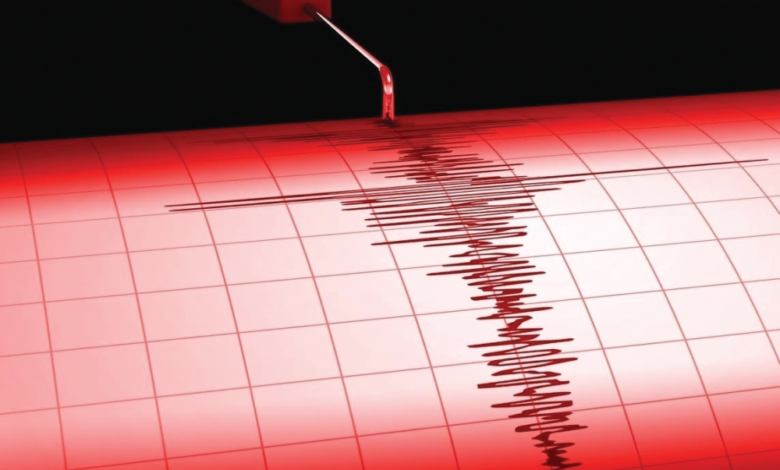
An earthquake measuring 4.3 on the Richter scale struck Bushehr province in southern Iran today, according to official seismological monitoring agencies. This event is part of a series of seismic activities that occur periodically in the region due to the geological nature of Iranian soil.
Details of the earthquake in Bushehr
The Seismological Center of the Geophysics Institute at Tehran University reported in an official statement that the earthquake occurred at the specified time local time, noting that its epicenter was at a depth of 12 kilometers below the Earth's surface. This depth is considered moderate, which typically reduces destructive effects compared to shallow, surface earthquakes.
As of the time of writing, there have been no immediate reports of casualties or significant damage to infrastructure or residential buildings in areas near the epicenter. Emergency teams and the Iranian Red Crescent continue to closely monitor the situation to ensure the safety of residents in surrounding villages and towns.
Geological reality and seismic activity in Iran
Iran is one of the most seismically active countries in the world, situated atop numerous major fault lines and complex geological faults. These faults cover at least 90% of the country's area, making it prone to frequent earthquakes of varying intensity. This constant activity is primarily caused by the collision of the Arabian Plate with the Eurasian Plate, generating immense pressure that is released in the form of earthquakes.
The importance of Bushehr's location and its strategic sensitivity
News of earthquakes in Bushehr province receives particular regional and international attention, not only because of the natural seismic activity but also because of the presence of the Bushehr Nuclear Power Plant in the province. However, experts consistently emphasize that vital facilities like nuclear power plants are designed to strict engineering standards to withstand earthquakes far exceeding magnitude 4.3, typically engineered to withstand very strong earthquakes to ensure no radioactive leaks occur.
History of earthquakes and safety measures
Throughout its modern history, Iran has experienced several devastating earthquakes that caused significant losses, prompting authorities to strengthen building standards and develop disaster warning and response systems. Even mild to moderate tremors, such as today's earthquake, serve as a constant reminder of the need for preparedness. Following such tremors, local authorities typically conduct inspection patrols to assess the situation and reassure residents, particularly in rural areas where buildings may be less resistant to seismic activity.